

How to plan a website redesign: what to watch for to grow your business



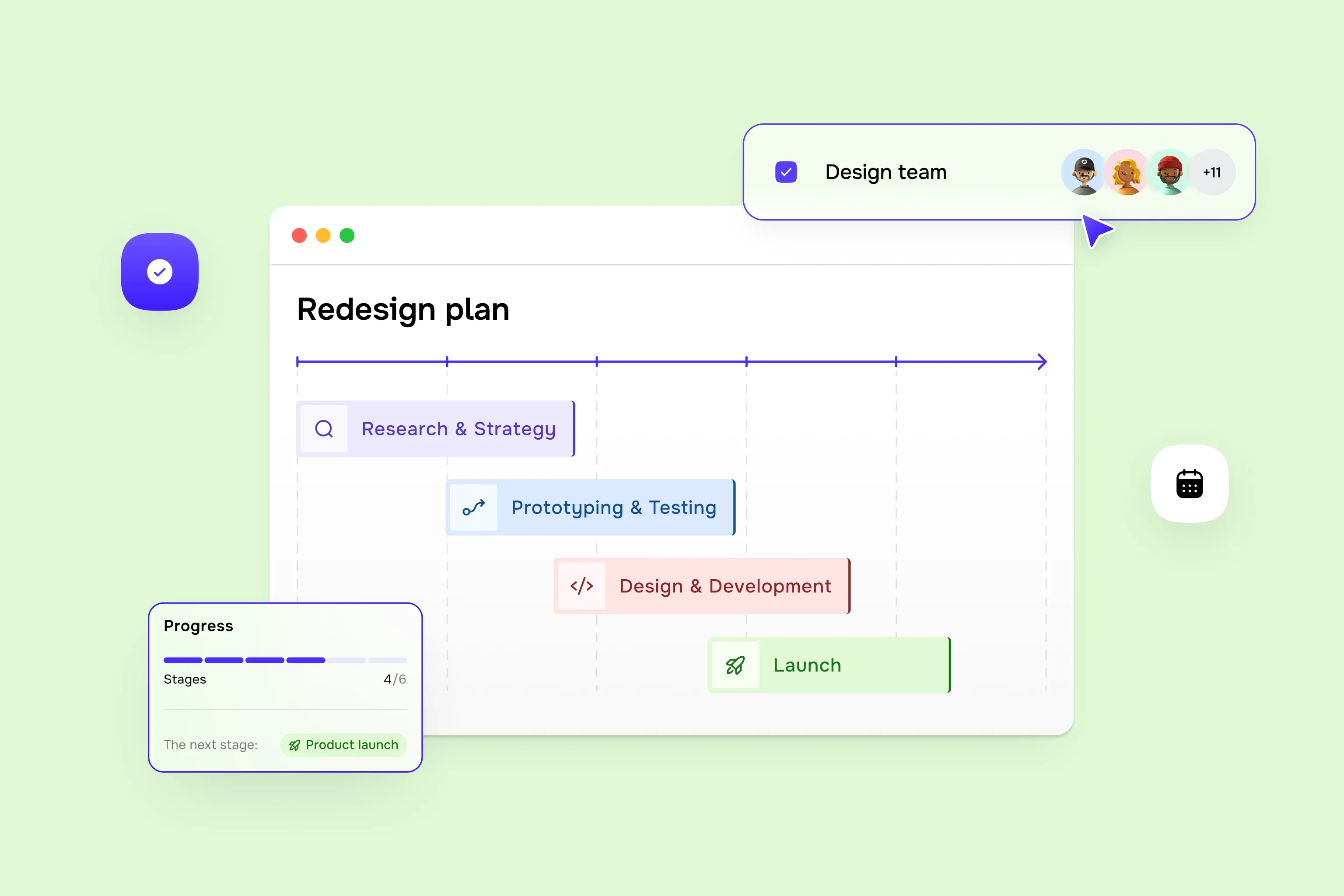

How to plan a website redesign | 1:22
No time to read? Explore through headphones, speakers, or on the go.
TL;DR
A website redesign should fix a real business problem. Start by reading what drives sales, trust, search visibility, and product adoption — then design around those priorities.
The strongest redesigns tie business goals, user behavior, conversion logic, content, and technology together while protecting what already works. The result: a site that performs better today and holds the structure to keep growing tomorrow.


A website redesign fails when a team starts designing before it decides what the website needs to do, rebuilds pages that never needed rebuilding, loses hard-won SEO traffic mid-migration, or runs into technical walls halfway through development.
A strong redesign project plan starts long before the first polished screen. Read what's working. Decide who you're designing for. Structure the new site with intent, and settle what has to happen behind the interface to make it hold up.
Here's how to plan a website redesign, from the first business question to the day it goes live.
Why proper planning matters for a website redesign
A website is one of the first places your business gets judged before a prospect ever talks to your team. For B2B companies especially, visitors compare you against competitors long before they book a call. That puts the site development inside your sales, brand, and acquisition system instead of next to it.
A plan gives you room to make the big calls while they're still cheap to change.
A proper discovery phase pulls business goals, user needs, technical requirements, scope, budget, timeline, and risk into one place before design or development starts. That cuts the odds of building the wrong thing and finding out after you've already paid for it.
Why do you need a website redesign plan?
"Let's make the site better" isn't a brief.
A working plan answers a short list of questions:
- What business problem are we solving?
- What isn't working on the current site?
- Who are we designing for?
- What should visitors do next?
- Which pages and journeys carry the most weight?
- What content stays, changes, or goes?
- What has to happen on the technical side?
- How do we protect SEO through the transition?
- What does success look like after launch?
These answers become your filter for every decision that follows. A flashy animation that slows the site down now has something to answer to. A page that looks sharp but doesn't help a user understand the product or move forward gets flagged for more work.
A redesign plan turns guesswork into a set of deliberate calls.
Reimagine your website with Goodface — start a conversation.
When should you start planning a redesign
Quick answer: earlier than most teams assume.
Planning should kick off before design — while you're still deciding what the project needs to deliver. That's the point to look at the current site, read the business context, check the technology, and decide whether you need a visual refresh, a full redesign, or a deeper replatform.
A visual refresh can carry you when the structure and UX already hold up. A full redesign earns its place when navigation, conversion, content architecture, or the experience itself needs to change. Replatforming adds a layer on top when the underlying technology is part of the problem.
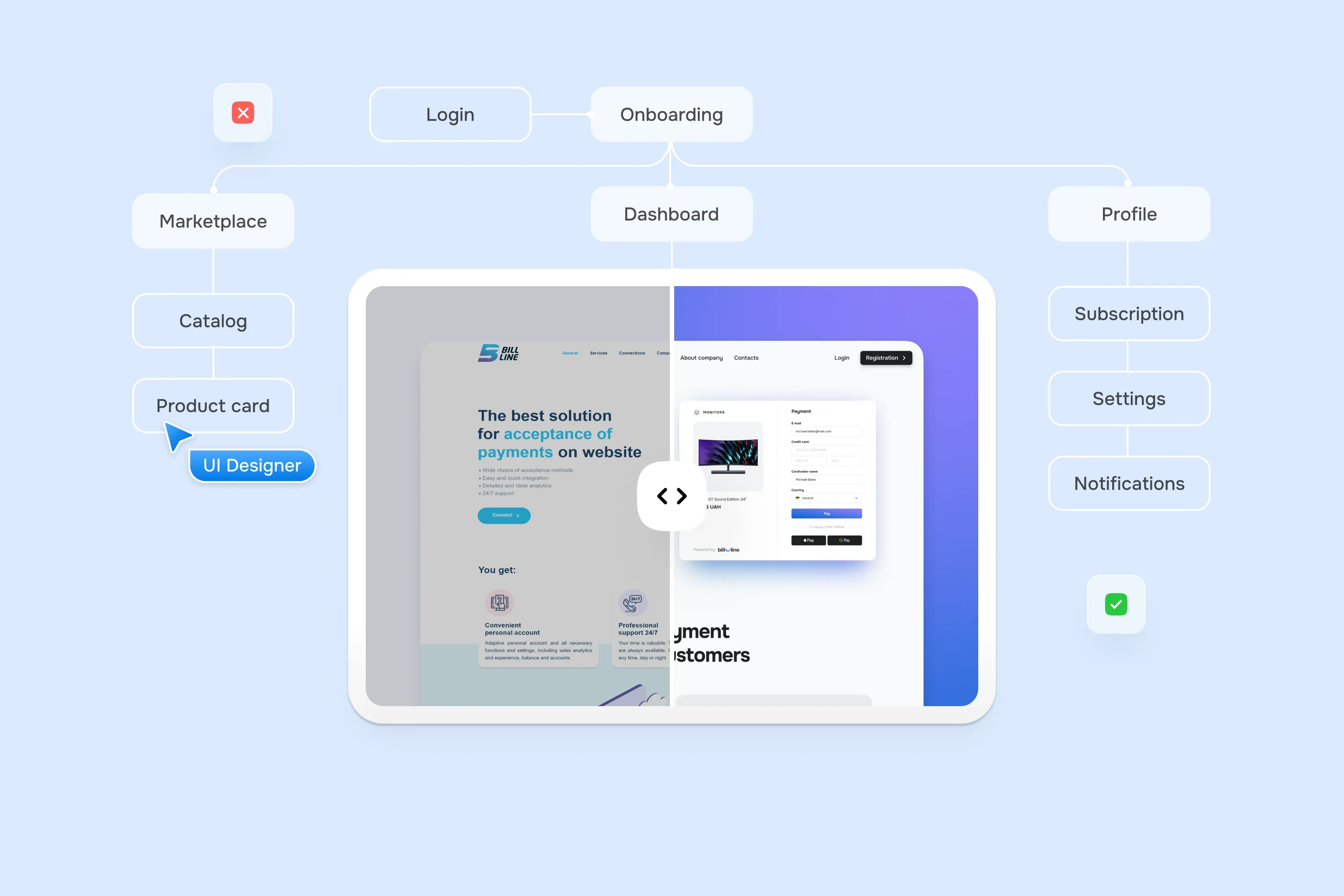
Scope drives everything downstream: budget, timeline, team, content migration, and technical build.
Understanding your website redesign goals
One thing to remember: your website is a long-term business asset and controls your revenue.
Pick outcomes you can measure. For example:
- Increase demo requests
- Improve conversion on key landing pages
- Grow organic traffic
- Cut drop-off in important journeys
- Improve page speed and Core Web Vitals
- Make product value easier to grasp
- Support a new market or audience
You don't need twenty KPIs on a dashboard nobody checks. A handful of outcomes that matter beats a wall of numbers.
Boost your conversion with our universal free guide to 30 conversion hacks from top FinTech websites.
Audit existing content
Don't assume everything on the current site should live or die by default.
Go through your pages, landing pages, blog posts, product content, and resources. Check which pages pull traffic, which convert, which rank, and which no longer reflect the business you run today.
Sort content into four buckets:
- Keep. It works and still earns its place.
- Improve. The information holds value, but the messaging, structure, or presentation needs work.
- Consolidate. A handful of weak or overlapping pages can become one stronger resource.
- Remove. It no longer serves users or the business.
This gives your redesign a content strategy instead of a copy-paste exercise.
Read the analytics
Your current site already holds evidence of how people use it.
Essential things to look at:
- traffic sources
- top landing pages
- conversion paths
- bounce and exit points
- device split
- page speed
- where people drop off
Analytics tells you where to dig.
Pair that with qualitative input. User interviews, customer feedback, support tickets, and sales-team notes explain why people act the way the numbers show.
Good discovery pulls from several sources at once: business, market, competitor, and user angles.
Research your audience and competitors
Your redesign exists for people who need something from your site.
Research tells you what that something is.
Your competitors, meanwhile, set the context for those decisions. Look at how they position themselves, structure their offerings, explain complex products, use proof, and move visitors toward action.
The goal is to read the patterns users already recognize, spot the gaps in the market, and find your own angle to state your value.
Understand users needs
Talk to real users where you can. User interviews, journey maps, user flows, and behavioral data turn assumptions into something you can actually design against.
Find out what they came looking for, what threw them off, what they needed to know before deciding, and what built or broke their trust in a company.
For B2B sites, that might mean mapping how different stakeholders vet a vendor. For fintech, it could mean pinning down what builds confidence around money, security, or compliance. For a product company, it might mean finding which features matter before someone books a demo.
Plan the new website structure
Once you've read the pain points, you can start building the architecture.
Your desired outcome: a structure that puts the right information within reach and makes the next step obvious.
Set the Page Hierarchy
Start with the major sections, then work down to individual pages.
A B2B site might need:
Company → Solutions → Industries → Case studies → Resources → Contact
A product company might lean harder into a product-led structure:
Product → Features → Use cases → Integrations → Pricing → Resources → Demo
The right hierarchy depends on the business. Every section needs a job to do.
Don't build a page just because competitors have one. If it doesn't answer your target audience’s need or back a business goal, question whether it belongs.
Map the key user journeys
Pages are half the story. You also need to know how people move between them.
Map the journeys that carry the most weight:
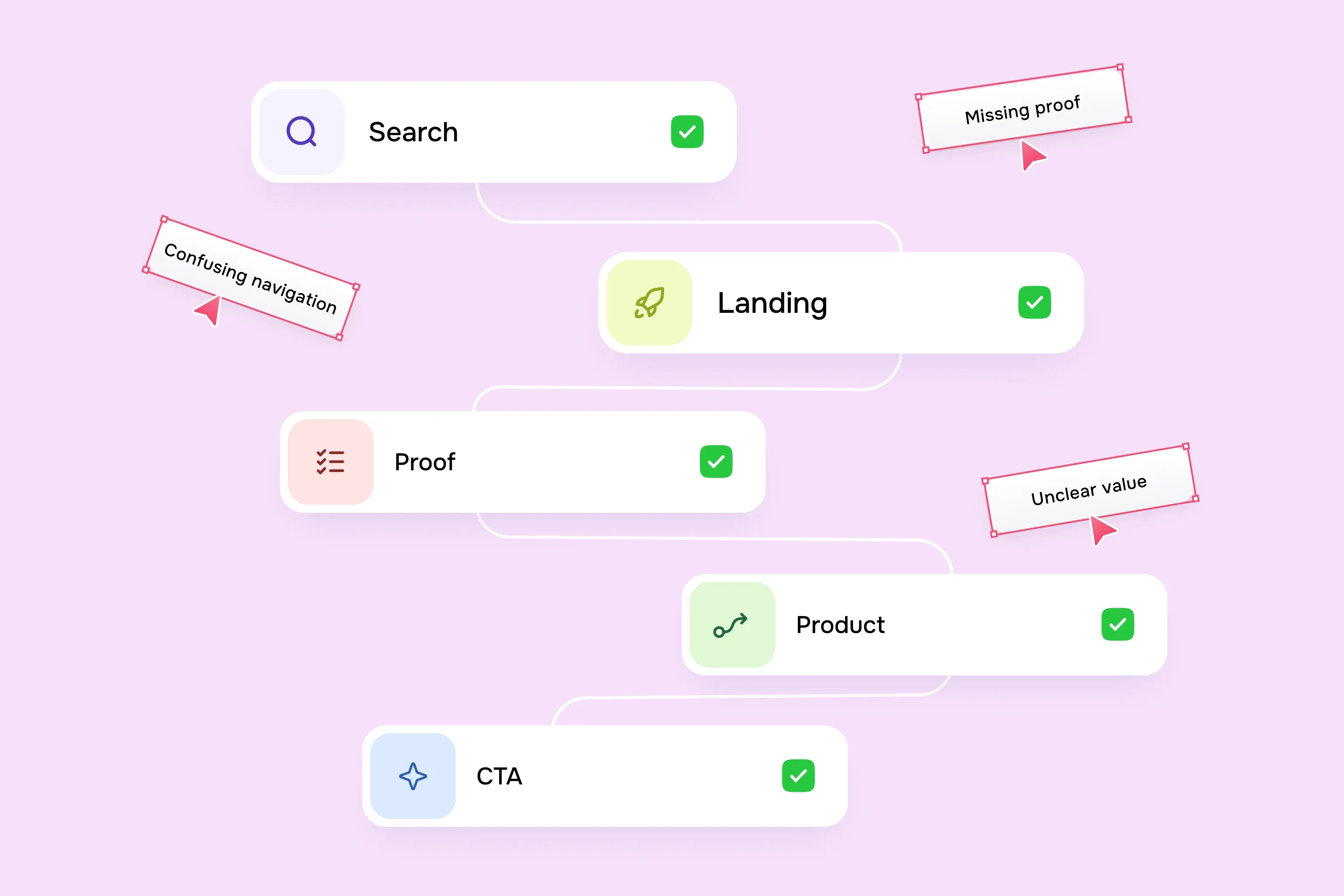
For a complex product, the path may run through a few educational steps before a visitor is ready to act.
This is where conversion logic earns its keep. Decide what someone needs to understand before the next step, where proof should sit, and where friction might send them off the site.
Wireframes and journey maps pay off here — they let you test the structure before you sink time into polished UI.
Does your website no longer match the business goals? Contact us to solve the problem.
Prioritize pages for the redesign
Start with the pages that carry the most weight across business importance, traffic, conversion potential, and user impact:
- Homepage
- Main product or service pages
- High-traffic landing pages
- Conversion pages
- Case studies and proof pages
- High-value content
- Supporting pages
This also keeps scope in check. If budget or timeline runs tight, you can put design effort where it stands to move the business.
Build SEO into the plan from the start
SEO shouldn't be a check you run the week before launch.
Before you touch the structure, list your important indexed URLs and note which pages pull organic traffic. Map redirects for changed URLs and protect content and internal links that already earn their keep.
Technical SEO belongs inside the build itself. Page performance, Core Web Vitals, structured data, semantic markup, and clean information architecture all shape how the finished site ranks.
At Goodface, technical SEO sits inside the codebase alongside performance and deployment.
Wireframes creation
Wireframes lock the structure down without freezing the visuals too early.
They define:
- Content hierarchy
- Page structure
- Navigation
- Key interactions
- CTA placement
- User flows
- Responsive behavior
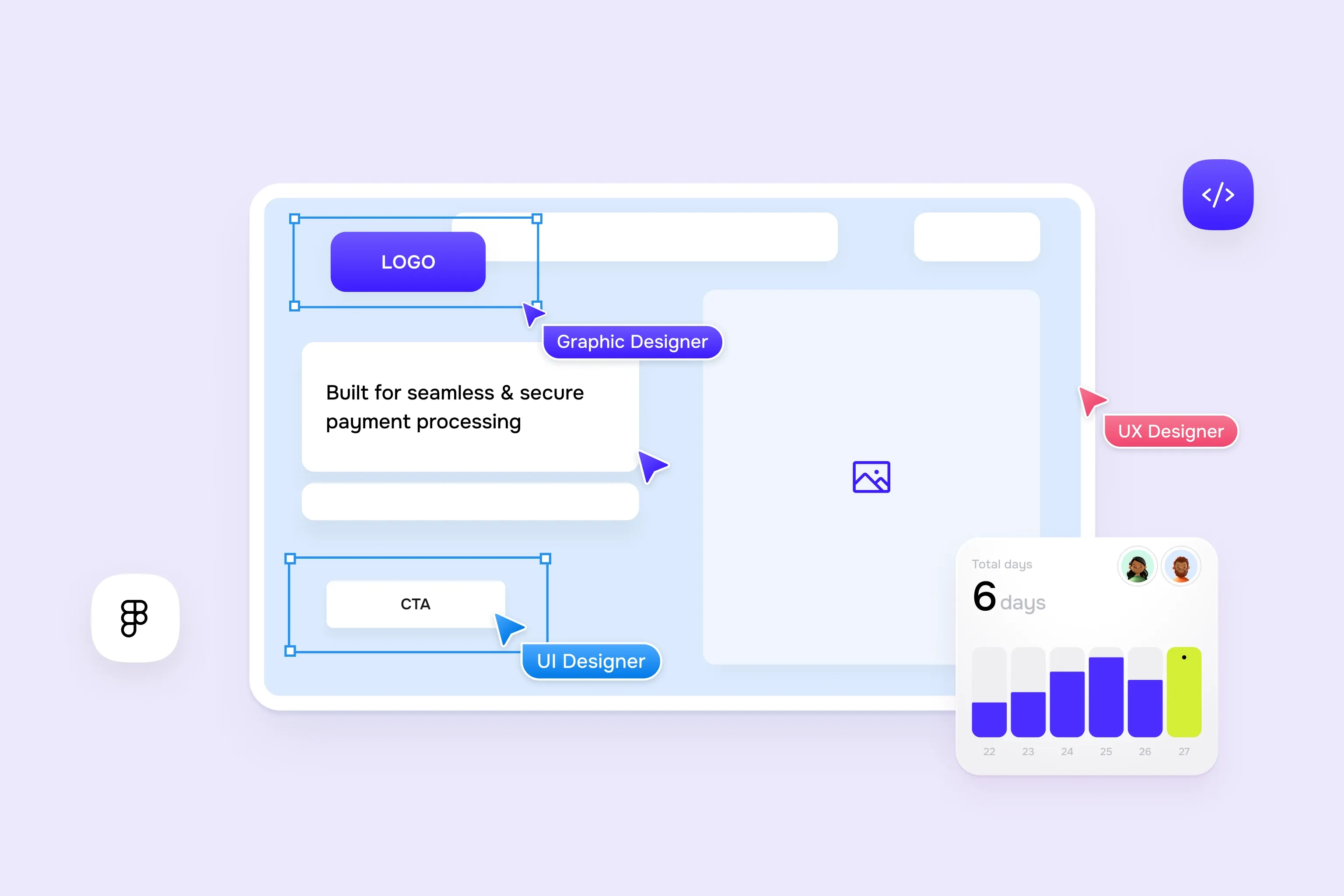
This is the phase where you catch structural problems while they're still cheap to fix.
A wireframe that feels off costs you an afternoon. A finished UI that feels off costs you a sprint.
For bigger projects, clickable prototypes take this further — they let teams test the logic of key journeys before development starts.
Mobile redesign: plan with intent
People use mobile sites differently. Screen space runs tight, navigation changes shape, content needs a harder edit, and speed matters even more.
Design the mobile experience on its own terms rather than squeezing desktop layouts down after the fact.
Screen sizes and design optimization
Work out the responsive behavior before development starts:
- Which elements stack?
- What happens to complex tables?
- How does navigation shift?
- Which interactions need a mobile alternative?
- How do images and animations affect load time?
- Where do CTAs stay visible?
- How does typography scale?
Good responsive design makes the experience hold up at every size.
Test the design before development
Don't wait until the site is coded to find out the experience doesn't work.
Test the prototype
Clickable prototypes surface problems with navigation, page hierarchy, CTA placement, and user flows before a single line of code goes in.
Test the journeys that matter, instead of whether users "like" the design. You want to know if they can find information, follow the pitch, complete tasks, and make a decision.
Check the mobile version
Run the same key journeys on mobile.
Watch for buried navigation, cramped tap targets, endless scrolling, text nobody can read, slow-loading media, and interactions that work on desktop but break on a smaller screen.
Testing early gives the team room to change course without turning every fix into rework.
Review new design changes
Check that the visual language holds together. Make sure components behave the same way across pages. Go over content hierarchy, responsive states, interactions, accessibility, and conversion paths.
Instead of building every new page from zero, reusable components, type rules, spacing, and interaction patterns give the team a foundation to keep building on. Goodface builds on modular component libraries for the same reason, so new pages come together fast without breaking the layout logic already in place.
Check everything before launch
| Area | What to check before launch |
| Content | Are all important pages and assets migrated correctly? |
| SEO | Do redirects work? Are metadata, headings, canonical URLs, internal links, and structured data in order? |
| Performance | Does the site load fast across devices and hit its performance targets? |
| Responsive behavior | Does it hold up across every screen size you support? |
| Functionality | Do forms, integrations, search, navigation, and interactive elements all work? |
| Accessibility | Can people navigate and read the site with different input methods and assistive tech? |
| Analytics | Are conversion events and tracking still firing? |
| QA | Has the site been tested across the browsers and devices that matter? |
Website redesign mistakes to avoid before starting
Before changing layouts, colors, or navigation, make sure you know what needs to improve. These are the mistakes worth catching before the first screen is redesigned.
Starting without clear goals
Without a clear target, design feedback turns subjective, and teams can burn weeks arguing over layouts with no way to tell if the work moves the needle.
Nail down what needs to change for the business before you argue about how the site should look.
Treating SEO as an afterthought
A new site can look sharper and still rank worse.
Changing URLs without redirects, cutting content that still pulls traffic, weakening internal links, or shipping performance regressions can undo years of organic growth in a single launch.
Build SEO into the structure, content, design, and development from day one.
Copying competitor websites
Competitor research earns its keep. Copying competitors shouldn’t be the end goal.
If everyone in your category runs the same messaging, structure, and visual language, matching them just adds one more site to a pile buyers have already seen. Study competitors to read the market's expectations and gaps, then build around your own positioning, audience, and strengths.
How we approached website redesign for different businesses
A plan is only as good as what it survives contact with. Three of our redesigns show how the same discipline plays out differently depending on what the business actually needs.
Finup — going from regional to global
Finup makes unlimited virtual cards work across both fiat and crypto, and it needed a brand and a website that could carry that ambition into new markets — not just a fresh coat of paint on the old positioning.
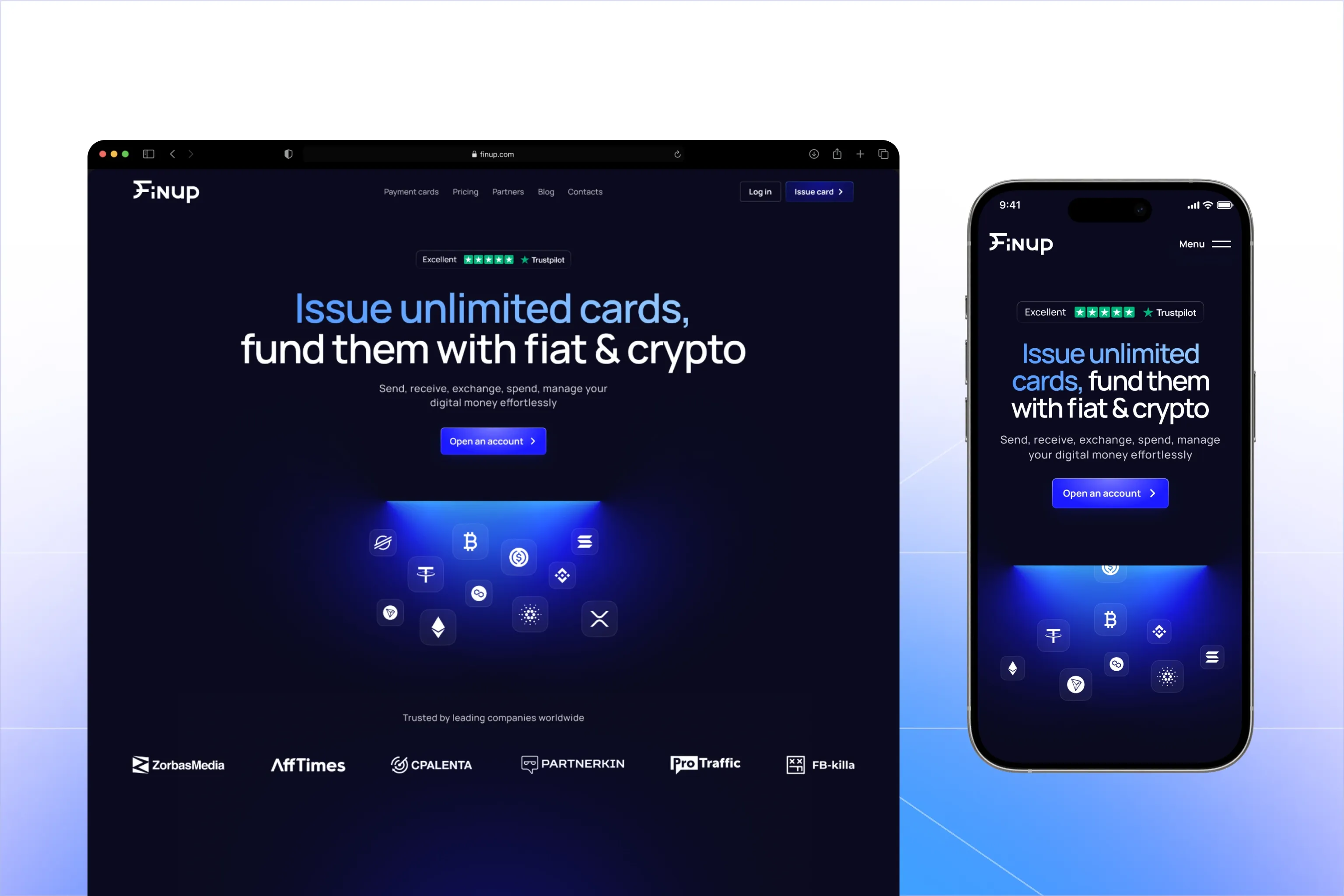
How we saw the Finup’s website redesign plan steps:
- Built a new identity around currency-inspired typography and radial gradients before touching a single screen
- Mapped the sitemap and wireframed the structure first, animation second
- Designed the physical cards as part of the product experience, not an afterthought bolted on at the end
- Shipped a dark, animated Webflow site built to convert, with a blog built in from day one so the brand has somewhere to keep talking after launch
The result: a site that turns friction points like issuing a card or tracking spend into something closer to ease — and one that now holds CSS Design Awards for Best UI, Best UX, and Best Innovation.
UniferX — making sense of a data-heavy catalogue
UniferX distributes organic fertilizers across borders, and its old site had outgrown its own structure: crops, regions, products, and trial results, all buried under an interface built for a much smaller company.
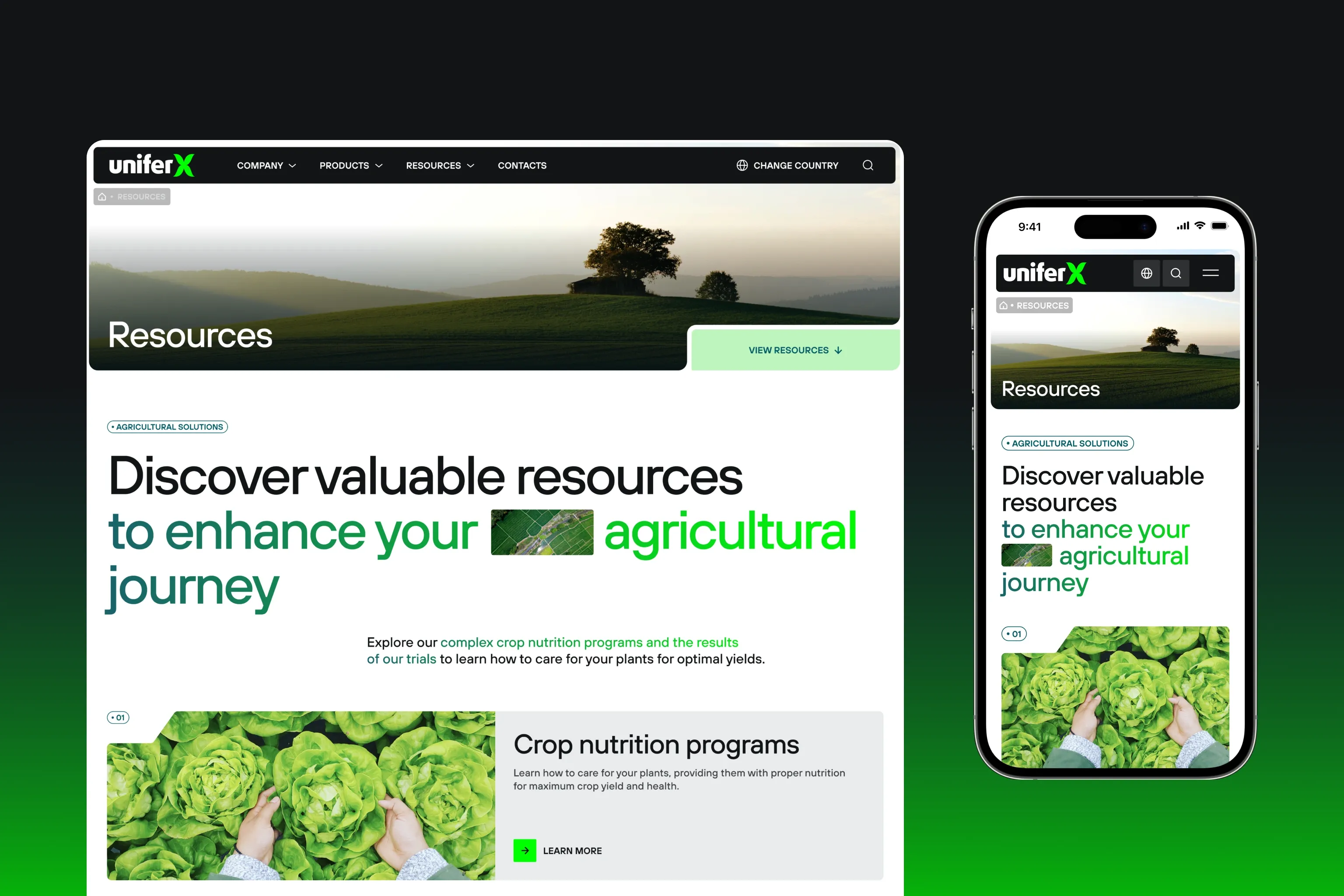
How our website redesign strategy for UniferX looked:
- Ran competitor research and mapped the audience before any design decision got made
- Tested two different design directions on wireframes, then built the one that held up under scrutiny
- Cleared the path through the site with an advanced search and an interactive map of regional distributors
- Built the whole thing to run in multiple languages, adapting automatically to a visitor's country and language
The outcome is a vibrant, fast site that's easy to explore and just as easy for the team to keep updated. UniferX redesign picked up three CSS Design Awards.
Orbital — evolving a legacy brand
Orbital moves payments and currencies across borders for global businesses, and it had outgrown its identity without needing to start from zero.
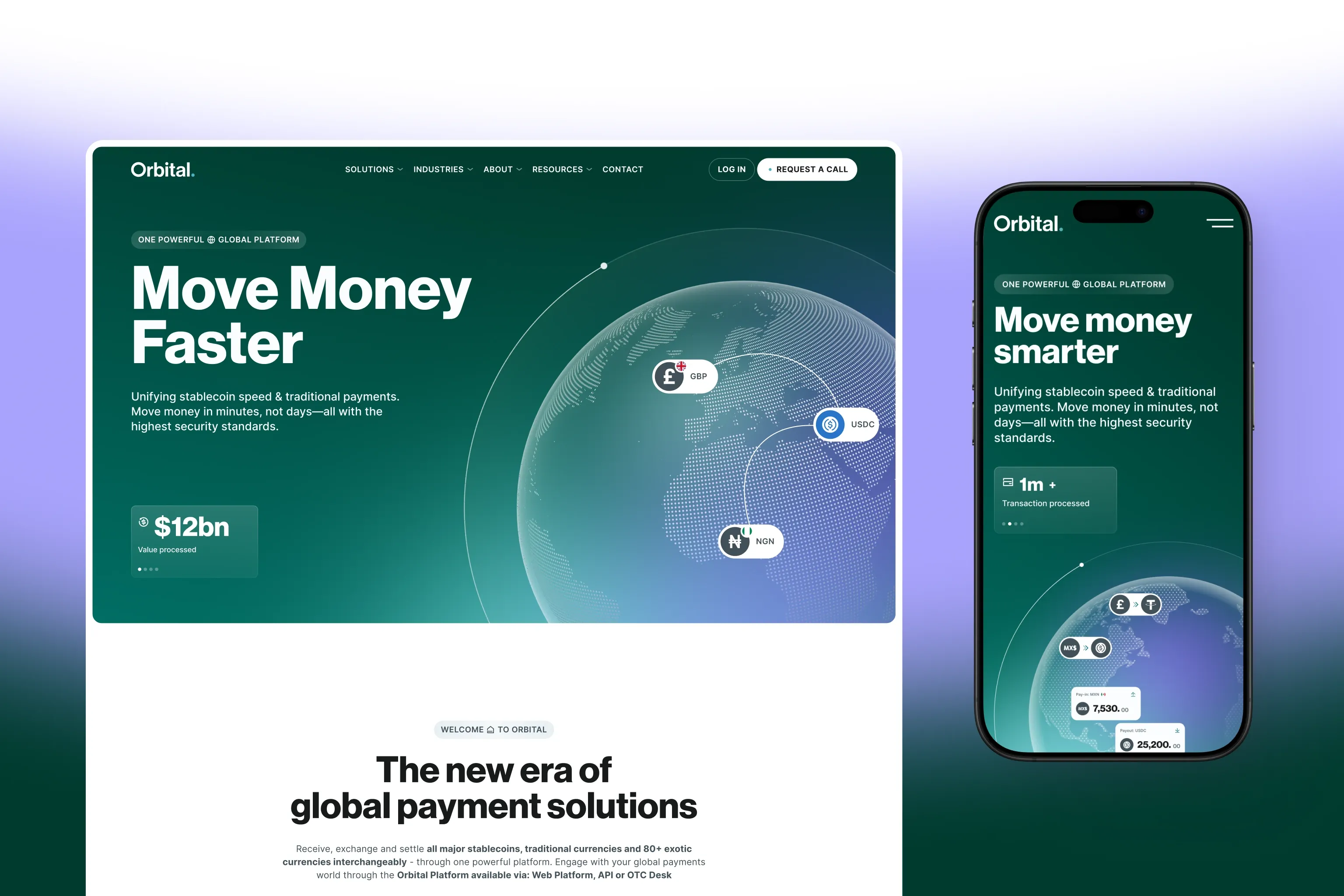
What we did with Orbital:
- Refreshed the existing brand instead of rebuilding it, keeping what clients already recognized while making it more flexible
- Rebuilt the site's navigation around how clients actually think — industries, services, capabilities — instead of the company's internal org chart
- Built SEO, performance, and accessibility into the site from the start, so it's ready to carry future marketing campaigns without another rebuild
- Relaunched the platform's stablecoin dashboard as the Stablecoin Retail Payments Index, turning a dense research tool into something people can actually read
The work didn't stop at launch — Goodface still partners with Orbital on presentations, campaigns, and event visuals, keeping the brand consistent as it grows
Three industries, three different problems — fintech cards, agritech logistics, cross-border payments — but the same starting move every time: map the structure before touching the interface, and let the project plan for website redesign decide what the design has to solve.
Ready to rethink your website? Let’s map it out.
Final thoughts
A website redesign project plan gets easier to manage the moment you stop treating it as a run of screens and start treating it as a business project.
That planning work can feel like it slows the start. In practice, it's what keeps the expensive parts of the project moving in the right direction — and gives you a website redesign plan you can actually defend, step by step, from the first meeting to launch day.
Discovery exists for exactly this reason: to turn a vague brief into a validated direction, a defined scope, a technical strategy, a budget, a timeline, and a roadmap — before execution gets expensive.
The strongest redesign plan is the one that makes the right calls early enough for the rest of the project to move with confidence.
FAQ
How long does a website redesign take?
A typical corporate website redesign takes around 6–10 weeks, depending on the number of page types, content volume, design complexity, integrations, and technical requirements. More complex digital products can take several months.
The timeline becomes much clearer during discovery, when we define the scope, dependencies, milestones, and technical requirements before development begins.
Should I redesign my entire website?
Not necessarily. A full redesign makes sense when the problems go beyond the visual layer — for example, when the information architecture, user journeys, conversion paths, content structure, performance, or technology no longer support the business.
If the structure and UX already work but the interface feels outdated, a focused visual refresh may be enough. The right approach is to identify what actually needs to change before deciding how much of the website to rebuild.
How do I set goals for a website redesign?
Start with the business outcome, then work backwards to the website.
Instead of “make the site look better,” define what should change after launch: more qualified leads, higher conversion, stronger organic acquisition, clearer product communication, better trust, or a digital experience that supports a new stage of growth.
Choose a small number of measurable goals and connect them to specific website improvements. Discovery can then validate whether the current UX, content, structure, and technology are actually preventing those outcomes.
How do I know if my redesign plan is ready?
Your plan is ready when the important unknowns have become decisions.
You should know why you're redesigning, who you're designing for, what the key user journeys are, which pages and content matter, what the new structure looks like, what happens to SEO, what technology you'll use, and what needs to be tested before launch.
You should also have a defined scope, timeline, responsibilities, and success metrics. If you're still discovering major requirements halfway through design, the planning stage isn't finished yet.
When should I hire a website redesign agency?
Bring an agency in before you start designing.
An experienced redesign team can help determine whether you need a refresh, a full redesign, or replatforming; uncover UX and technical risks; align business and user needs; and define the right scope before development gets expensive.
This is especially valuable when the website has complex products, multiple stakeholders, significant organic traffic, custom integrations, or a design system that needs to scale. The earlier the right questions are answered, the fewer expensive decisions need to be reversed later.
Read more


 Book a call
Заповніть форму або
бриф із запитаннями



 LinkedIn
 Instagram
Welcome to Goodface privacy notice.
Goodface respects your privacy and is committed to protecting your personal data. This privacy notice will inform you as to how we look after your personal data when you visit our website (regardless of where you visit it from) and other sites we own and operate. And tell you about your privacy rights and how the law protects you.
We may change the privacy policy from time to time to reflect changes to the products and services that we provide and how we process your personal data.
We will not share your information with any third party outside of our organization, other than as necessary to fulfil your request if any."
INFORMATION WE COLLECTWhen you visit our website, our servers may automatically log the standard data provided by your web browser. This data is considered “non-identifying information”, as it does not personally identify you on its own. It may include:
- Your computer’s Internet Protocol (IP) address;
- Your browser type and version;
- The pages you visit;
- The time and date of your visi;
- The time spent on each page;
We may ask for personal information, such as your name and email address. This data is considered “identifying information”, as it can personally identify you. We only request personal information relevant to providing you with a service, and only use it to help provide or improve this service.
We collect information by fair and lawful means, with your knowledge and consent. We also let you know why we’re collecting it and how it will be used. You are free to refuse our request for this information, with the understanding that we may be unable to provide you with some of your desired services without it.
We will only process personal data and communicate with you if:
1. You have given us consent to the processing of your personal data and communicating for one or more specific purposes i.e. requesting products or services from us, downloading material or information from our website or submitting a contact us form.
2. Performance of a contract
3. Where we have a legitimate interest for contacting you in relation to our products and services
DATA PROCESSING AND STORAGEWe only retain personal information for as long as necessary to provide a service, or to improve our services in future. While we retain this data, we will protect it within commercially acceptable means to prevent loss and theft, as well as unauthorised access, disclosure, copying, use or modification. That said, we advise that no method of electronic transmission or storage is 100% secure, and cannot guarantee absolute data security.
Rights and choices of individuals:
- See what data we have about you, if any;
- Change/correct any data we have about you;
- Have us delete any data we have about you;
- See what security measures we apply to your data;
- Express any concern you have about our use of your data;
You may opt out of any future contacts from us at any time. You can do the following at any time by contacting us via the email address given on our website: goodface.agency
Лишились питання або хочете обговорити проєкт?


