

How to approach UX design for an MVP: why polished UI screens ≠ first product version




How to approach UX design for an MVP | 1:28
No time to read? Explore through headphones, speakers, or on the go.
TL;DR
The barrier to building an MVP is gone — the risk of building something awkward remains. Execution now outpaces ideation and roadmapping, and product teams can't ignore that gap.
- Deciding what to build still takes judgment: what, for whom, and which one feature earns the first release. No tool makes that call for you.
- With AI and no-code tools, teams can build some MVPs in weeks, but it can't set the business logic, architecture, or priorities behind it. That part stays human — what's scarce, and what we sell, is a first version that doesn't need to be torn down once real users touch it.
- An MVP's main job is to validate the key hypothesis and show whether the product is worth investing in at all.
- A slick demo isn't a tested product, and skipping the foundation doesn't save time. It just moves the cost to month three as technical, product, and UX debt — teams end up rebuilding what they thought they'd shipped.


Stop wondering how to build an MVP
Building an MVP is not as challenging as it used to be. With AI's ability to write code, wire backends, and generate dozens of UIs, the barrier to building something has mostly disappeared.
What still matters and challenges you is WHAT to build, for WHOM, and WHY those people should care in the AI-first era. And, of course, which of a dozen directions belongs in the first release.
A first version does more work than its size suggests, letting a team gather evidence before committing more time and money to the wrong direction.
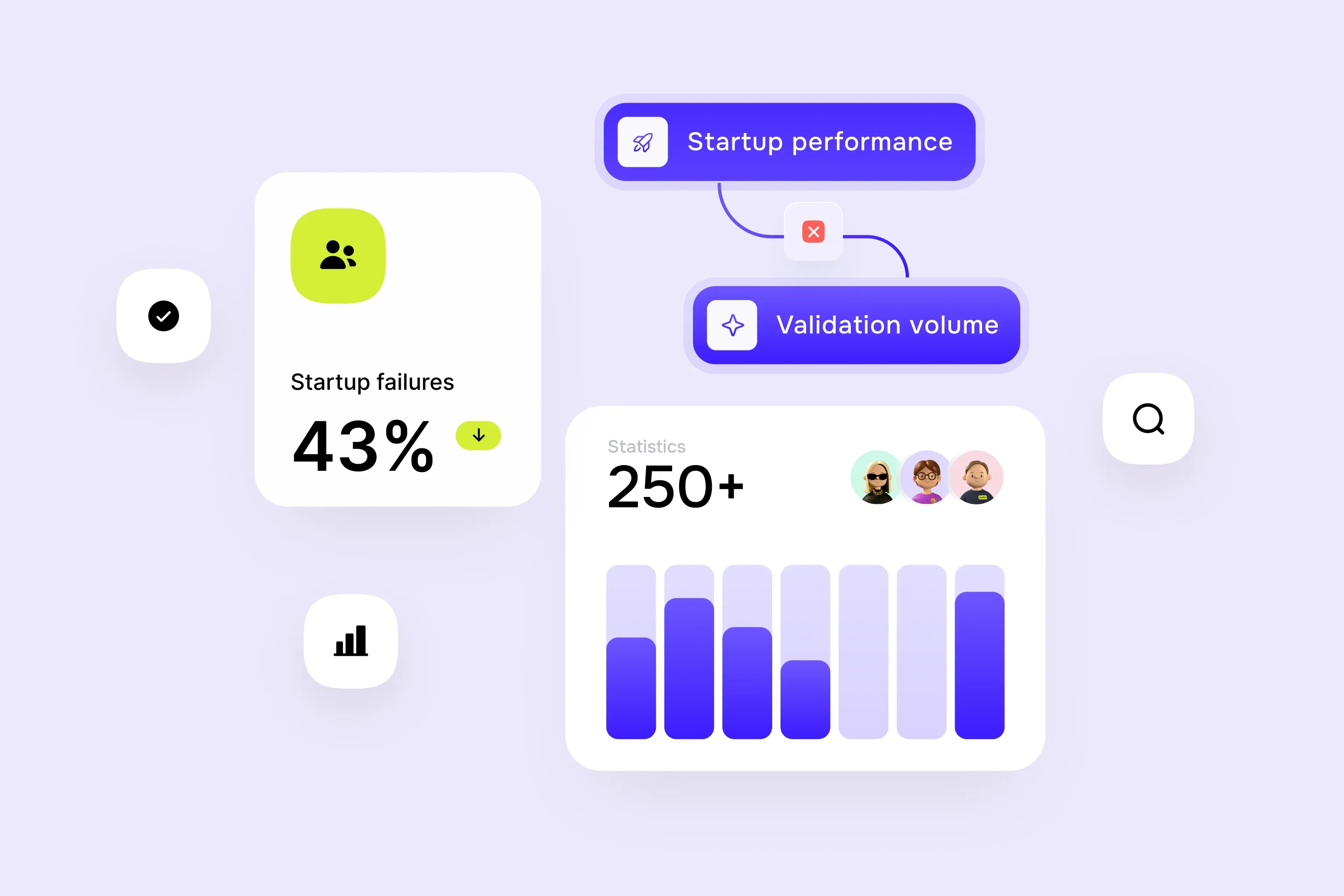
- 43% of startup failures trace back to poor product-market fit. CB Insights studied 431 VC-backed startups that shut down since 2023 and named product-market fit among the top reasons cited. Two-thirds of those failures hit early — before the companies found a viable market.
- More validation didn't mean better performance. A 2026 study covering 16 software startups and 29 founder interviews found no link between the number of validation activities and results. The stronger performers pushed for stronger evidence instead — paying customers before a full MVP. The researchers call these findings exploratory and want larger studies to confirm them.
- New 2026 HBR research interviewed more than 250 founders across 30+ countries. Founders still spend too much time perfecting products before they talk to customers. Earlier research cited in the piece found that founders who sold early used those customer relationships to test assumptions and sharpen their offerings.
We treat UX design MVP as the discipline that answers that question deliberately, instead of leaving it to default to whatever a tool generated first. It comes down to one question we ask over and over with a client: what does this person need to do right now, and what's standing between them and doing it?
The minimum viable product has one job: prove the idea holds up in front of real people.
Don’t treat UX as a nice-to-have before launch
AI can generate screens and wire up a backend before launch. Behind the scenes, only real people's work tells you which user problem is worth solving first, which feature earns its place in version one, or which shortcut takes six months of rework later.
That judgment (business logic, information architecture, priority calls) doesn't come pre-loaded into any tool. We've watched teams hand it over anyway, and pay for it after launch: the interface looked ready, but the logic behind it lacked awareness.
There's a quieter risk we flag early with every client, and it's the one that catches founders off guard most often: a polished prototype and a working MVP aren't the same thing. A demo that lands well in a pitch meeting can still be completely unprepared for a single real user, let alone a hundred.
Mistaking one for the other is how teams end up rebuilding in month three what they thought they'd already shipped.
When speed outruns the foundation, every later release costs more, and that cost usually comes in one of the options:
- Technical debt — integrations that are hard to change. Adding a new payment provider or data source then means reworking large parts of the backend.
- UX debt — user flows that don't match each other. When user journey processes follow different logic, users have to relearn the product on every screen.
- Product debt — features built on unverified assumptions. They use up sprint time and roadmap space while users ignore them.
Not sure which parts of your MVP deserve UX design attention first? Talk to Goodface.
What MVP UX design actually validates
An MVP UX means far more than a smaller version of the full product. We build it to test one business hypothesis and give you a clear signal on whether the next round of investment is worth making.
That distinction shapes everything else:
The main user problem
Before a single screen takes shape, we name the problem in plain terms: who has it, when it shows up, and what people do about it today without the product. If we can't state that in one sentence, the design will drift no matter how much care goes into it later.
The core user journey
We map and refine one path end to end — the single journey a first user takes from arrival to the moment they get real value — before anything else gets attention.
The features that earn their place
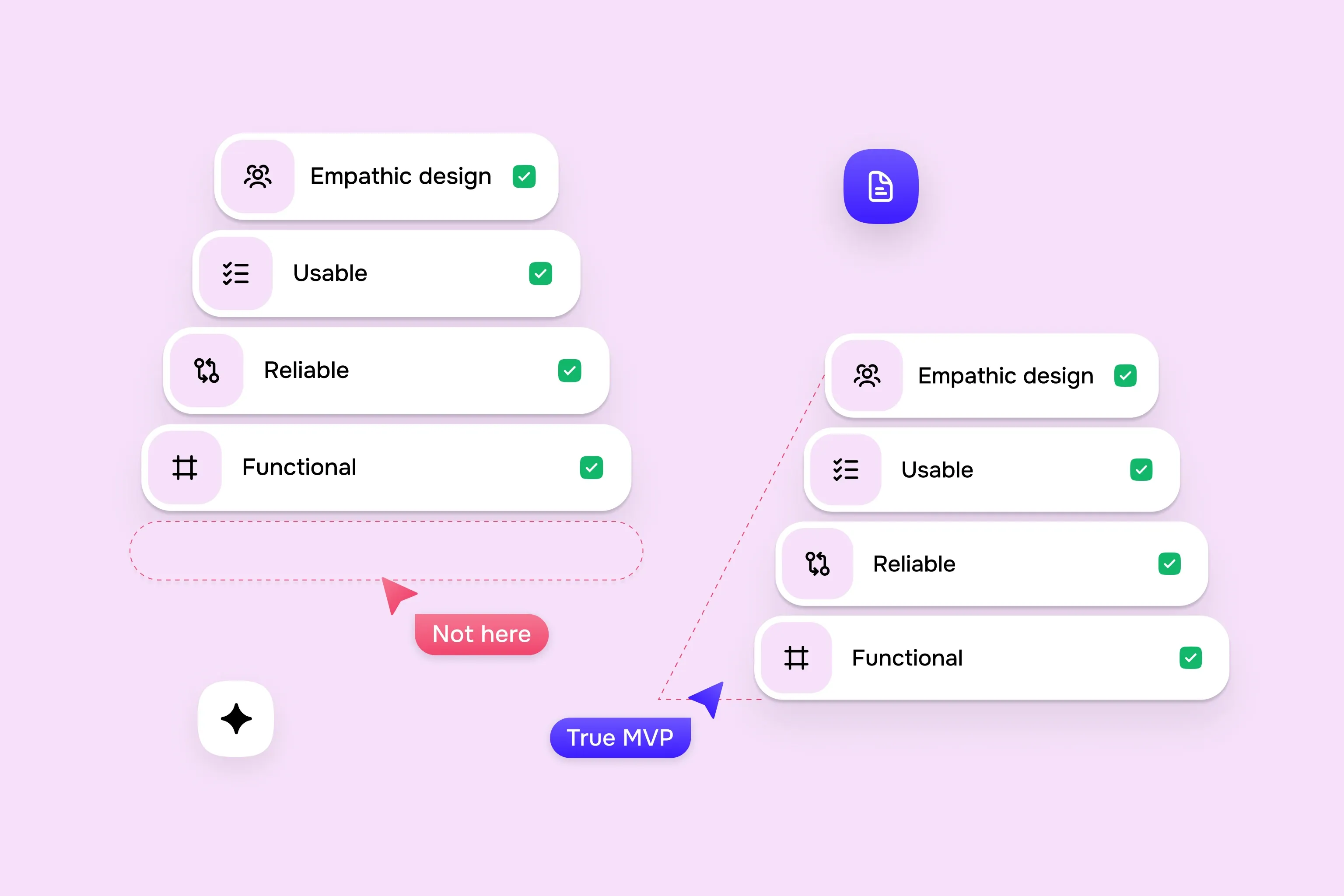
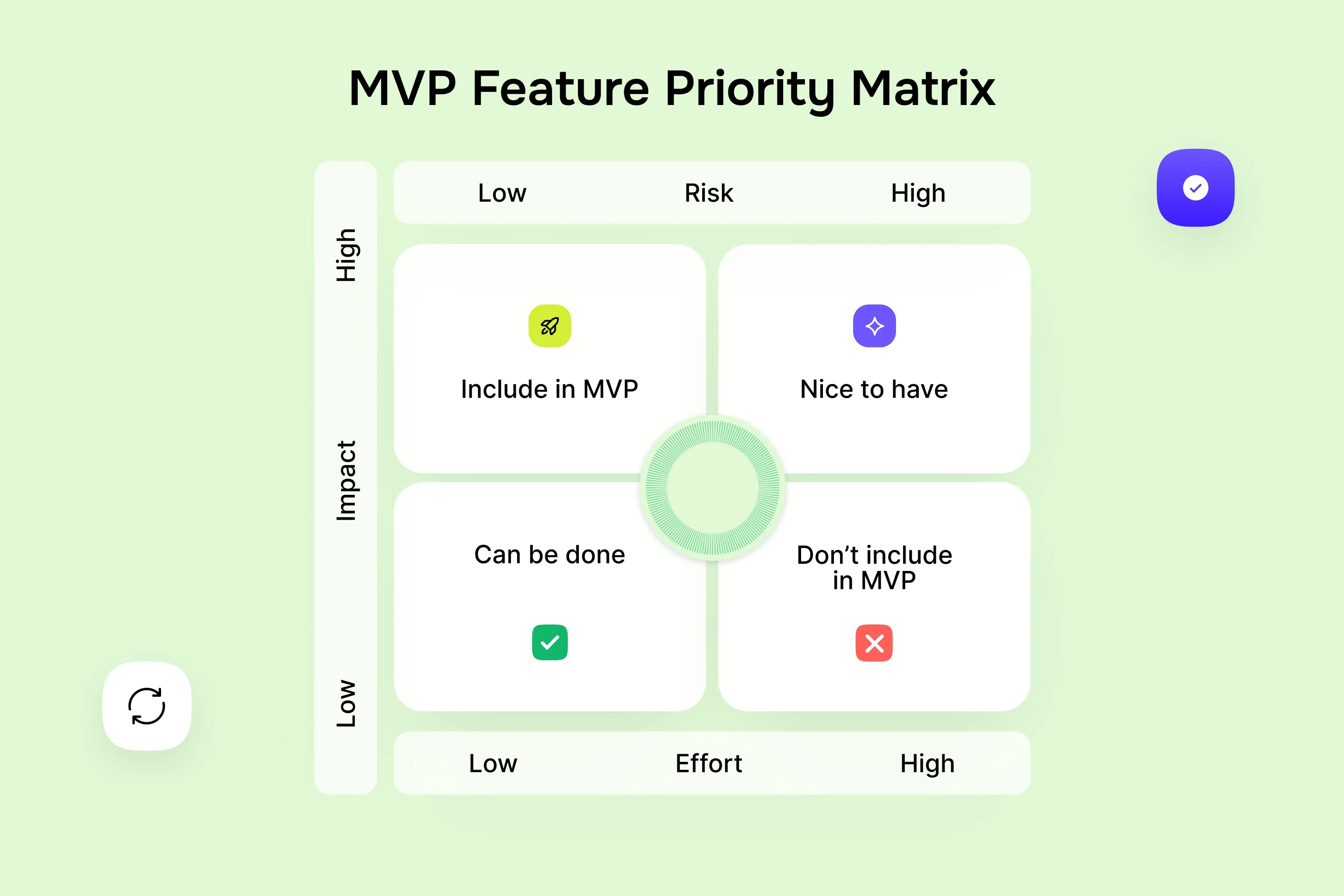
Not every roadmap item belongs in version one. We test each feature against a plain question: would removing it stop the core journey from working? If the answer is no, it waits. That question has saved more than one client from shipping a bloated first release.
Interactions that leave no room for guessing
Users don't forgive confusion. Buttons, labels, and states need to say exactly what they do. Whether the interface looks polished is a question we come back to later — it's not what decides whether the first version earns its keep.
A fast, honest read on product-market fit
We design every screen to make it easier to see how people actually behave, not just what they say they'll do in an interview.
How we run the process of building an MVP
- We start with the one hypothesis this version needs to test, then work out the smallest set of screens and actions that can test it honestly. Anything outside that scope gets logged for later, not squeezed in.
- From there, we rank what's left by the value it delivers on the core journey — a feature that's cheap to ship but adds nothing to the main flow still has no place in this version. Holding that line early is what keeps scope from creeping back in once development starts.
- Once it's live, we watch closely. Real usage surfaces what no planning session can: where people hesitate, what they tap by mistake, what they never find at all. We treat the first release as a question put to real users and adjust the design to what comes back.
- And once the hypothesis holds and the product earns a second version, we take a second look at the shortcuts that got it to launch. The interface needs to grow into a system that can carry more weight instead of buckling under it — this is usually where the cost of skipping early UX work shows up, and the faster a product got built without a foundation, the more there is here to untangle.
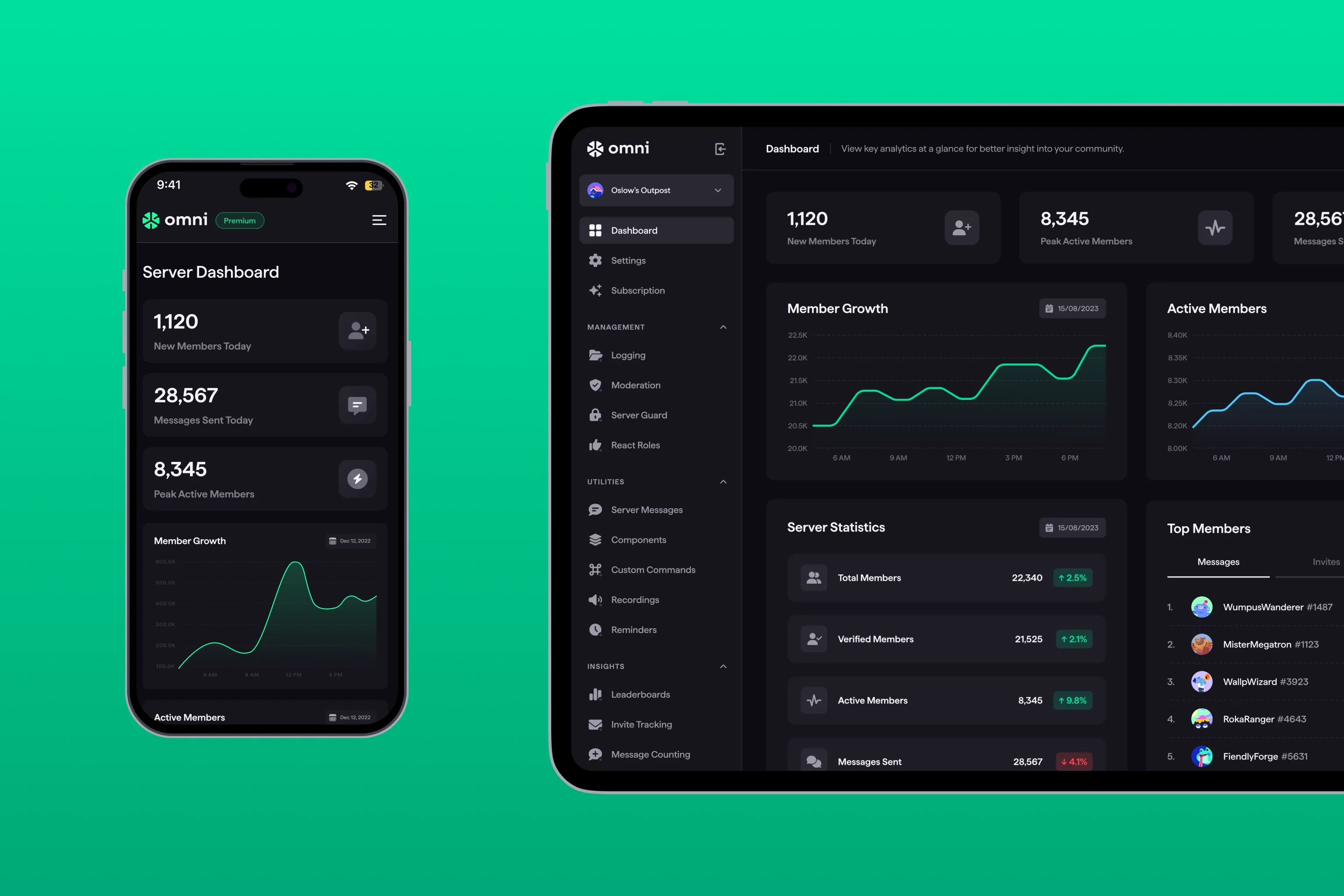
On Omni, we compiled the first functional blocks into a debut release fast. Then we ran it past a Friends and Family test with the client and found the functionality too thin to carry as a real first version.
We didn't ship it anyway. We kept building until the product could stand on its own: a working MVP in four months, a full multifunctional platform in the eight that followed.
That's the version of "fast" we build toward. Anyone can assemble something in days. We test whether that something actually holds up before we call it done — and push past the point where a quick build stops being a foundation.
Turning early traction into a scalable product takes more than good instincts — get in touch with Goodface.
Key UX MVP design principles
- Solve one problem well before spreading thin across five.
- Map the main journey completely before adding anything secondary.
- Keep interactions predictable — a tap should never leave someone guessing.
- Treat every release as a signal, not a finished product.
- Judge a product by what holds up with a real user, not what performs well in a demo.
- Plan for the next version while shipping the first one.
In our experience with Creo, we had four months to launch and a founder's full vision on the table — gamification, course creation, a marketplace. We scoped the MVP to what two user types actually needed first: students taking courses, administrators uploading materials.
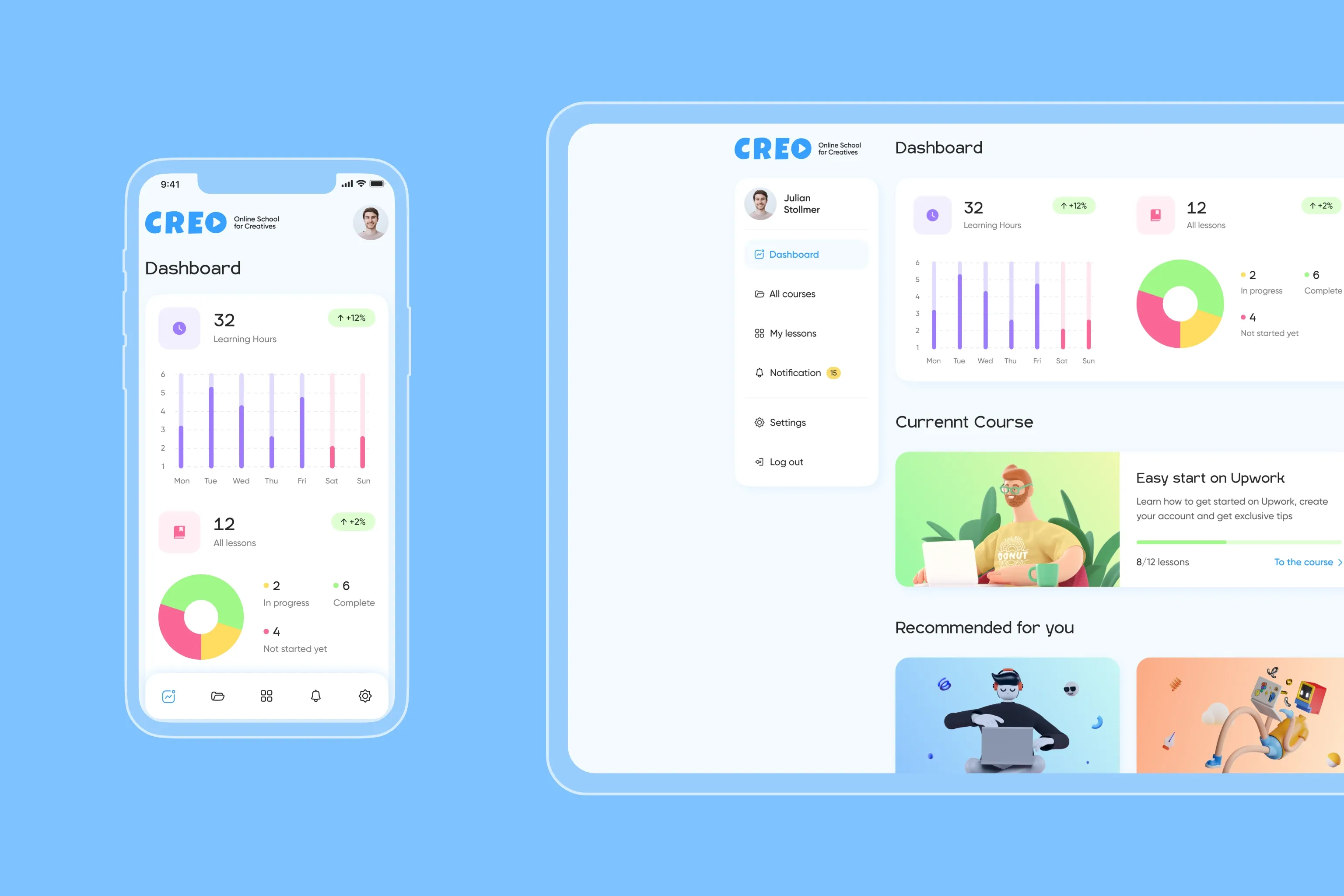
That prioritization call is the MVP in UX design principles that carried the project. We built for the core journey and shipped it in four months — simple enough to use without a walkthrough.
The read stood up: the platform now holds 35,000 students, runs white-label for 40 businesses, and lifted course completion from 35% to 65%, well above the industry's 13% average. That came from deciding which one journey the MVP had to prove — and building only that.
The product research behind the UX design
We build in enough contact with real people to test assumptions before they turn into code. A handful of honest conversations with the right users tell us more than a polished survey sent to the wrong ones — it's usually the first thing we push a founder to do before opening any design tool.
Our process starts with talking to people who genuinely have the problem the product addresses, then asking what they do with the product, what frustrates them about it, and what would need to change for them to switch — and we pay closer attention to what they actually do than to what they say they'll do, because that gap is where most MVP UX decisions get made. Spotting it early is a skill built from doing this repeatedly.
We rank every feature request against one measure: does this move a user closer to the outcome they came for? Internal opinion and what a competitor shipped last month don't factor in.
When two features compete for the same slot, the one that teaches us something sooner wins — held consistently, that's what keeps a build lean and keeps a team honest about what the MVP is actually meant to test.
UX architecture comes before UI design
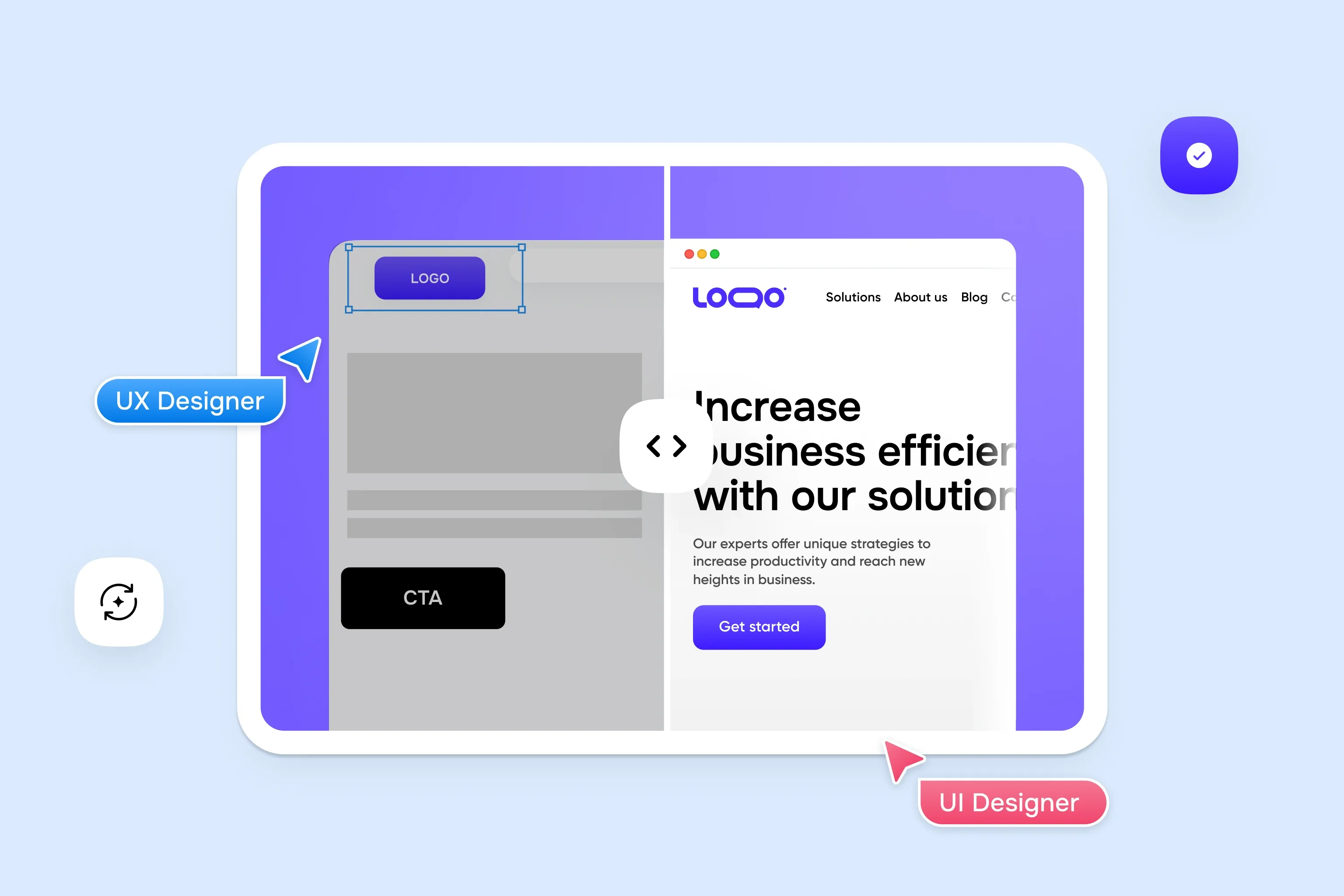
UX and UI get lumped together often, but the line between them matters more. UX decides what the product does and how a person moves through it. UI decides what that experience looks and feels like.
The hard part is deciding what to build before you style it. Skip that step, and UX and UI end up racing each other: every design choice reopens a question that should've been settled at the structure stage.
A rough interface with clear structure teaches a market more than a perfect one built on the wrong assumptions. Easy to state, surprisingly easy to lose sight of under deadline pressure.
- UX sets the direction — the journey, the priorities, the logic behind each screen.
- UI gives that direction a shape people can trust: readable text, clear buttons, a layout that doesn't fight the eye.
Structure with no visual care reads as unfinished; polish with no clear task reads as empty. Getting both right, even at MVP scale, is where design experience earns its place on a team.
How to validate UX for MVP before development
- Build a clickable prototype — no production code yet, just enough to walk the main journey.
- Sit a handful of people down with it — small group, real attempt at the core task.
- Watch users without stepping in— no hints, no explaining. We let them struggle if they struggle.
- Track where they pause, misclick, or give up — that's the raw material for the fix list.
- Turn those issues into the pre-launch fix list — nothing theoretical, only what people actually hit.
- Focus on one journey — the one the MVP exists to prove.
- Push that single journey until it holds up on its own — no explaining it out loud. It’s not ready If it needs a guide.
What we saw in our work: on 365games, the client wanted a "partner platform" — new features pulled in through outside integrations. Before writing production code, we tested that idea: the integrations would overload the platform. That's validation doing its job — catching the break before development.
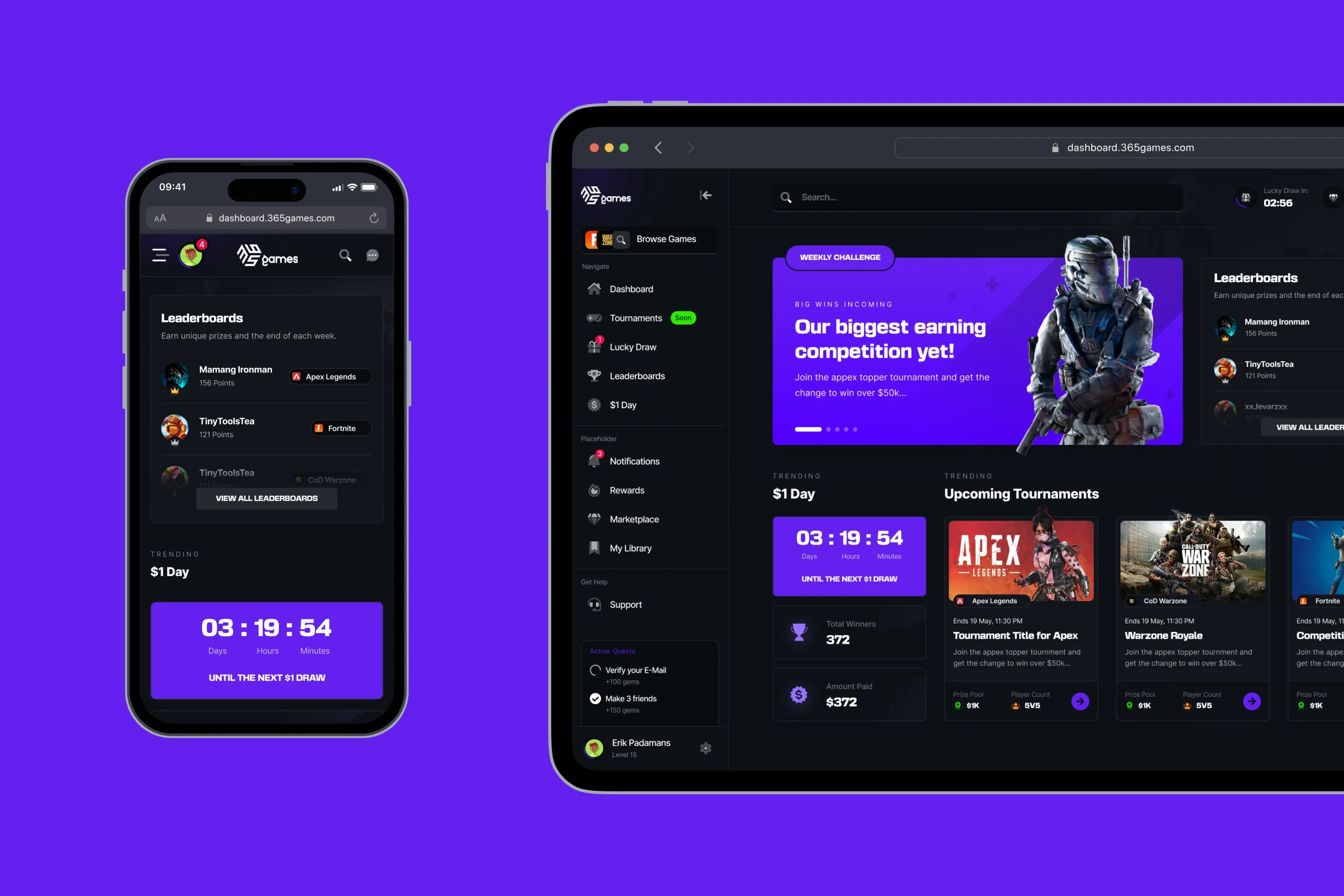
We designed our own tournament system instead: event creation, team invitations, match management, a points-and-prize structure the client could run independently. That single call, made before a line of code was written, shaped everything downstream — server architecture, leaderboard, subscription system.
In six months, we delivered a ready-made minimum viable product built on a decision no AI tool makes on its own: knowing which idea to keep before it costs a rebuild.
Let's create the MVP you won't have to rebuild — start a conversation.
How much UX design does an MVP actually need?
Enough to make the core journey clear, and not a stroke more. Design what a first user needs to succeed at the one thing that matters, and leave what only matters at scale for later.
A fintech dashboard built for professionals calls for different care than a consumer app aimed at a five-minute first session — but both need the same discipline behind them: solve the real problem first, then refine.
Final thoughts
The market's full of products that shipped in a week and hit a wall in month two. This happens when speed and judgment come apart, and lately they usually do.
We treat it as a reason to be deliberate about the one thing speed can't buy: knowing which version of the product is worth building first.
We build first versions teams won't have to tear down — ones that answer a real question and give the product somewhere solid to grow from.
FAQ
What is the difference between UX and UI for an MVP?
- UX decides what the product does and how a person moves through it — the journey, the priorities, the logic behind each screen.
- UI decides what that experience looks and feels like while it happens.
At the MVP stage, we lean on UX first: a rough interface with clear structure teaches a market more than a polished one built on the wrong assumptions.
How long does MVP UX design take?
Long enough to map one journey end to end, and not a day longer.
We scope it to the single hypothesis the MVP needs to test, so the timeline tracks the product, not a template — a five-screen consumer flow and a fintech dashboard for professionals don't run on the same clock, but both stay tight enough to keep the build lean.
Do I need a prototype for an MVP?
Not always, but in most cases we recommend one. If your product logic is already well defined and validated, we can move straight from a product roadmap into development without a clickable prototype. When there are open questions about how users will actually move through the product, though, a prototype pays for itself.
We put a clickable version in front of real people before any production code gets written. It costs a fraction of a full build, and it catches problems while they're still cheap to fix, before they're built into a codebase and become expensive.
How do you test UX for an MVP?
We sit a handful of the right users down with the prototype and watch, without stepping in to help. Where they pause, what they click by accident, where they give up — that becomes the fix list.
We keep that testing narrow: one journey, pushed until it holds up without anyone explaining it out loud, rather than every possible path at once.
Can UX design change after the MVP launch?
It should. We treat the first release as a signal, not a finished product. Real usage shows what no planning session can — where people hesitate, what they never find — and once the hypothesis holds, we go back and turn the shortcuts that got the product to launch into a system that can carry real weight.
Do you build a product MVP for idea-only startups?
We work best with growth-stage teams — those with capital, a POC, a roadmap, or at least a clear commitment behind the idea. That gives us something real to design against, rather than guessing at direction before it exists.
An MVP tests a hypothesis in front of real users, and that hypothesis needs to be set before we start — who the user is, what problem we're solving, what "working" looks like. Without that groundwork, we'd be building on assumptions nobody's validated yet.
Read more

 Book a call
Заповніть форму або
бриф із запитаннями


 LinkedIn
 Instagram
Welcome to Goodface privacy notice.
Goodface respects your privacy and is committed to protecting your personal data. This privacy notice will inform you as to how we look after your personal data when you visit our website (regardless of where you visit it from) and other sites we own and operate. And tell you about your privacy rights and how the law protects you.
We may change the privacy policy from time to time to reflect changes to the products and services that we provide and how we process your personal data.
We will not share your information with any third party outside of our organization, other than as necessary to fulfil your request if any."
INFORMATION WE COLLECTWhen you visit our website, our servers may automatically log the standard data provided by your web browser. This data is considered “non-identifying information”, as it does not personally identify you on its own. It may include:
- Your computer’s Internet Protocol (IP) address;
- Your browser type and version;
- The pages you visit;
- The time and date of your visi;
- The time spent on each page;
We may ask for personal information, such as your name and email address. This data is considered “identifying information”, as it can personally identify you. We only request personal information relevant to providing you with a service, and only use it to help provide or improve this service.
We collect information by fair and lawful means, with your knowledge and consent. We also let you know why we’re collecting it and how it will be used. You are free to refuse our request for this information, with the understanding that we may be unable to provide you with some of your desired services without it.
We will only process personal data and communicate with you if:
1. You have given us consent to the processing of your personal data and communicating for one or more specific purposes i.e. requesting products or services from us, downloading material or information from our website or submitting a contact us form.
2. Performance of a contract
3. Where we have a legitimate interest for contacting you in relation to our products and services
DATA PROCESSING AND STORAGEWe only retain personal information for as long as necessary to provide a service, or to improve our services in future. While we retain this data, we will protect it within commercially acceptable means to prevent loss and theft, as well as unauthorised access, disclosure, copying, use or modification. That said, we advise that no method of electronic transmission or storage is 100% secure, and cannot guarantee absolute data security.
Rights and choices of individuals:
- See what data we have about you, if any;
- Change/correct any data we have about you;
- Have us delete any data we have about you;
- See what security measures we apply to your data;
- Express any concern you have about our use of your data;
You may opt out of any future contacts from us at any time. You can do the following at any time by contacting us via the email address given on our website: goodface.agency
Лишились питання або хочете обговорити проєкт?


