

Top fintech UX design agencies in London for banking and financial services in 2027


Updated at
08.05.2026
TL;DR
The strongest fintech UX agencies in London combine domain knowledge with UX research, product strategy, design, and delivery capability. They understand that financial products carry higher stakes — users must trust them with money, identity, and sensitive decisions. Agencies that only do visual design rarely meet this bar. The shortlist below focuses on teams with real fintech case studies, regulatory awareness, and a track record of shipping financial products.


If you are choosing a UX partner for a fintech product in London, you need more than attractive interfaces. You need a team that understands financial trust, onboarding flows, KYC and identity verification, regulatory constraints, complex data dashboards, and long-term product evolution. Generic UX studios rarely have this depth.
This article covers agencies with a London presence or strong relevance to the UK market and verifiable fintech or financial services experience. Each entry is assessed on UX depth, product thinking, fintech portfolio evidence, and strategic fit — not just visual output.
How we chose the best fintech design UX agencies in London
The selection criteria reflect what matters in financial product work specifically — not a generic ranking of creative studios. Here is what we evaluated:
- London presence or strong UK market relevance. Each agency listed either has offices in London, operates a London-focused team, or has a well-established track record serving UK-based fintech and financial services clients.
- Real fintech, banking, or financial services experience. Portfolio depth in regulated industries: neobanks, payments, lending, investment platforms, insurance, or core banking. General SaaS experience does not substitute here.
- UX depth beyond visuals. Research capability, usability testing, information architecture, and the ability to design for trust, compliance, and conversion in high-stakes environments.
- Product strategy and consultancy capabilities. The best agencies operate as product partners, not just execution vendors. They contribute to roadmap thinking, interpretation of user research, and business-aligned design decisions.
- Proof of delivery: portfolio, reviews, recognitions. We considered publicly available case studies, Clutch reviews and ratings, industry recognitions, and client references where verifiable. Agencies without public fintech evidence were excluded.
- Best-fit clarity: startup, scaleup, enterprise, bank, SaaS. Each agency has a profile that suits certain client sizes and contexts better than others. We note this explicitly rather than presenting every agency as suitable for every project.
Clutch, DesignRush, and similar directories use portfolio depth, review volume, and service focus as their primary evaluation signals. We apply the same logic, with additional weight on the financial services domain experience specifically.
Quick comparison of the best fintech design agencies in London
The table below gives an at-a-glance overview of each agency covered in this article.
| Agency | London Presence | Fintech Focus | Core Services | Best For | Engagement Model |
| Goodface | London / global | Strong | UX/UI design, website development, branding | Corporate, scaleups, neobanks | Project/ retainer |
| ustwo | London HQ | Strong | Product design, strategy | Enterprise, established brands | Retainer/ partnership |
| Else | London HQ | Strong | UX strategy, service design | Banks, regulated products | Consultancy/ project |
| IDEO | London studio | Moderate | Design thinking, innovation | Large enterprises, banks | Strategic engagements |
| Cyber-Duck | London-based | Strong | UX research, design, development | Regulated industries, government | Project/ retainer |
| Foolproof (A Zensar Company) | London office | Moderate | UX research, CX strategy | Financial services, retail | Consultancy |
| Designit | London studio | Moderate | Service design, UX, product | Corporate, mid-market | Retainer/ project |
Top fintech UX agencies in London
to work with in 2027
1. Goodface Agency
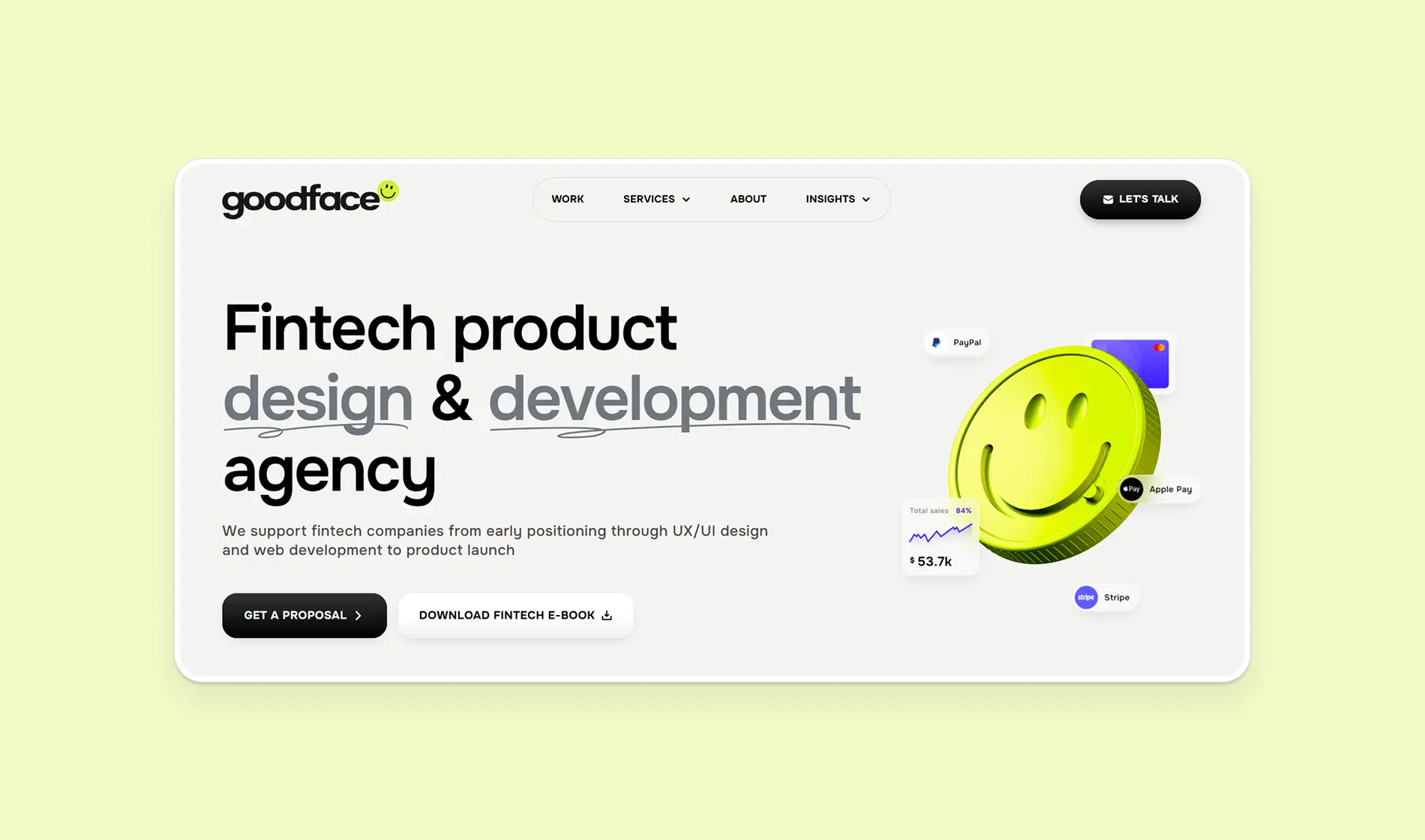
Creating digital experiences for businesses ready for the next level
Goodface is a fintech design and development agency specialising in launching products and supporting brands. Unlike generalist studios that occasionally work in finance, primarily with neobanks, payment platforms, and fintech SaaS. Published case studies include:
- Magnetiq Bank (European B2B bank with a focus on eCommerce and FinTech).
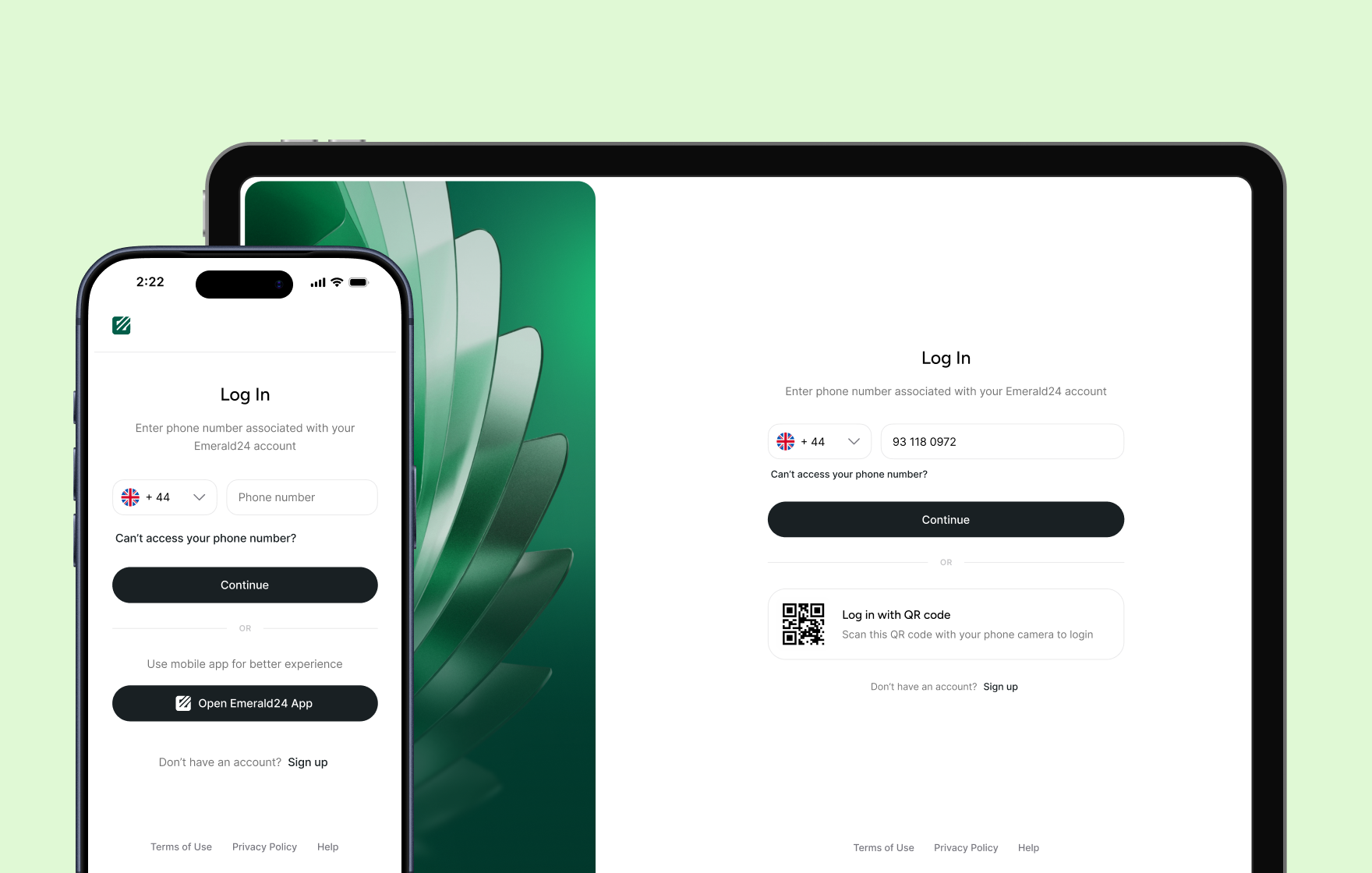
- Emerald24 (Digital bank and online payment platform)
- Orbital (Financial services ecosystem for global B2B clients).
- Corefy (B2B payment orchestration platform used by 100+ payment providers).
- PayOp (payment gateway product serving global merchants).
- FinUp (lending and personal finance management).
Each success story documents the product challenge, design approach, and outcome — not just screenshots.
Their service offerings span UX/UI design, audits, website development, and branding. This means a fintech team can engage them from early product positioning to launch without switching agencies.
The agency also publishes editorial content on fintech MVP strategy, product experience, UX/UI patterns, and fintech website conversion hacks, which reflects genuine domain engagement rather than broad marketing content. Best for startups and scaleups, as well as digital banks and payment platforms, looking for an advanced fintech partner with a product mindset and design thinking.
If you face any UX/UI challenges in your fintech product or service, let's talk about possible solutions!
2. ustwo
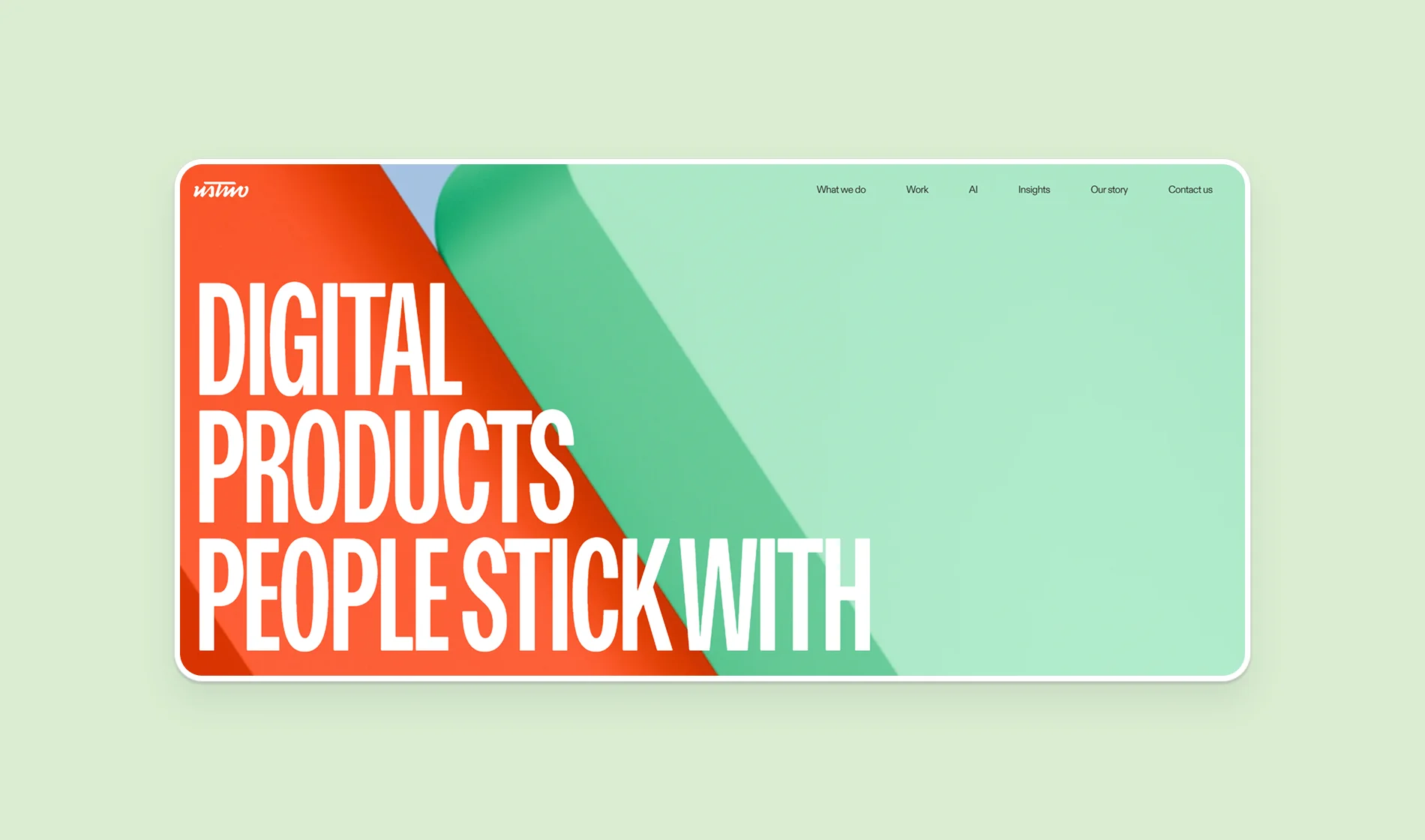
Product craft and long-term partnerships with global financial brands
ustwo is a London-founded, employee-owned digital product studio (B Corp certified) headquartered at 62 Shoreditch High Street, with studios in New York, Malmö, Lisbon, and Tokyo. Founded in 2004, they are one of the most recognised independent product design studios in the UK, generating between $25–50M in annual revenue and partnering with major global brands across technology, healthcare, and financial services.
In fintech specifically, ustwo has worked with JPMorgan (an early client) and more recently with GreenPortfolio, a climate fintech tool they co-designed to help investors understand the climate impact of their portfolios. Their approach is product-led rather than interface-led — cross-discipline teams of design, technology, strategy, product, and delivery work together from discovery through to launch. This makes them better suited to clients who want a thinking partner across a product lifecycle, not just a design-execution shop.
3. Else
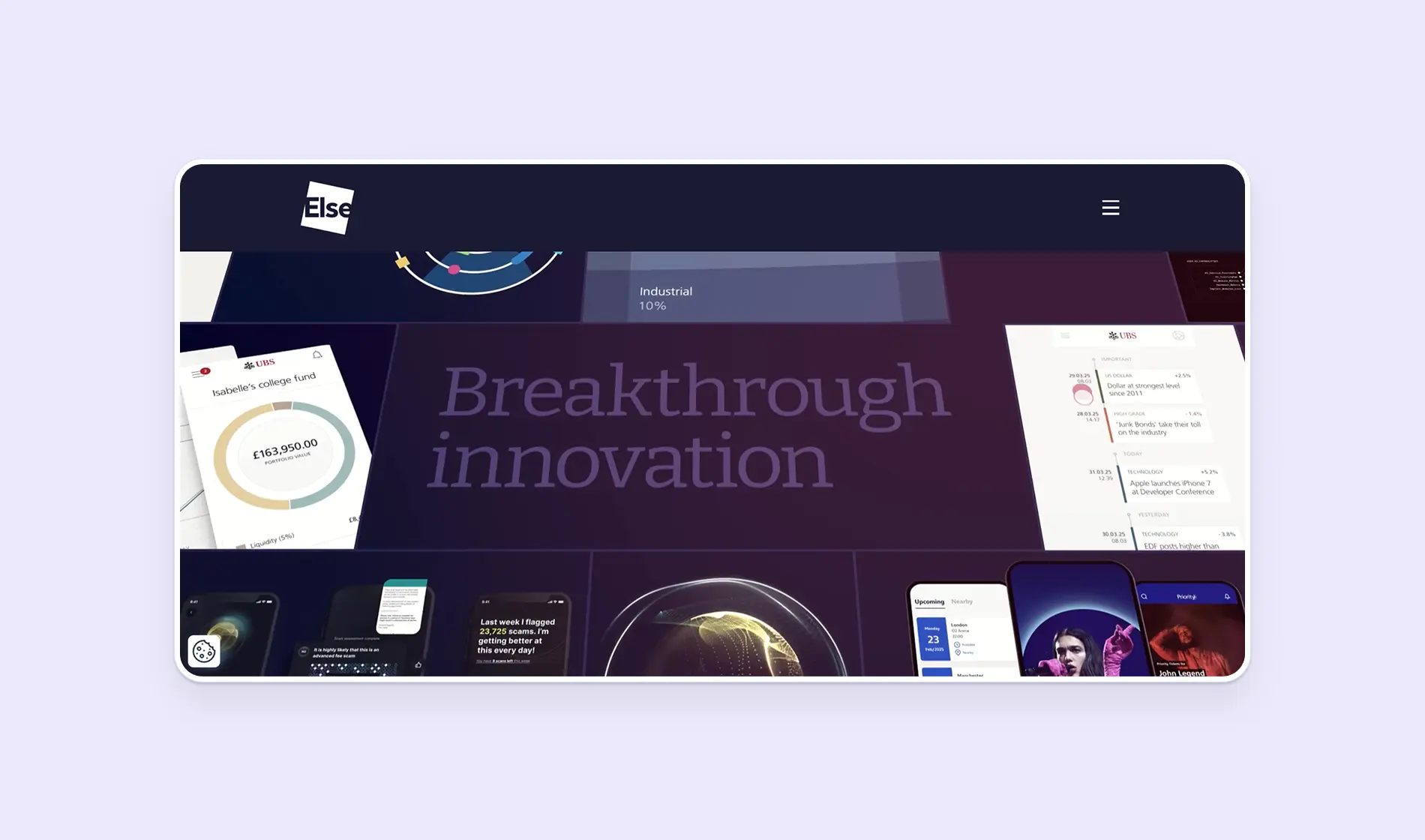
Innovation consultancy for financial brands launching or transforming digital products
Else is a London-based experience design and innovation consultancy founded in 2010, based at Metropolitan Wharf in Wapping (E1W). The team of 11–50 senior practitioners applies behavioural science to design — their stated focus is creating positive changes in behaviour, which maps directly onto financial product challenges around savings habits, investment engagement, and onboarding completion. They have completed 300+ projects across 70+ clients, from lean startups to large multinationals.
Best for financial brands that are launching something new, responding to regulatory or competitive disruption, or needing strategic design leadership for a defined innovation challenge. Their consultancy-first model is not built for high-volume execution: they work on a small number of projects at once and do not offer full development handoff. Portfolio breadth extends well beyond fintech into gaming, health, and FMCG — financial services is one vertical among several, rather than the primary focus.
4. IDEO

Strategic design thinking for financial institutions redefining what they build
IDEO is one of the world's best-known design-thinking firms, founded in Palo Alto in 1991, with a London studio serving UK enterprise clients. They are responsible for popularising the human-centred design methodology globally, and their work with financial institutions has influenced how banks approach product strategy, customer experience, and service innovation at the highest level.
Best for Tier-1 banks and major financial institutions undertaking significant product or service innovation programmes. Not a fit for fintech teams needing to build and ship a product. The engagement model is structured around strategic consulting — expensive, slow by product-team standards, and oriented toward C-suite outcomes rather than product delivery milestones.
5. Cyber-Duck
Together, we empower transformation beyond digital
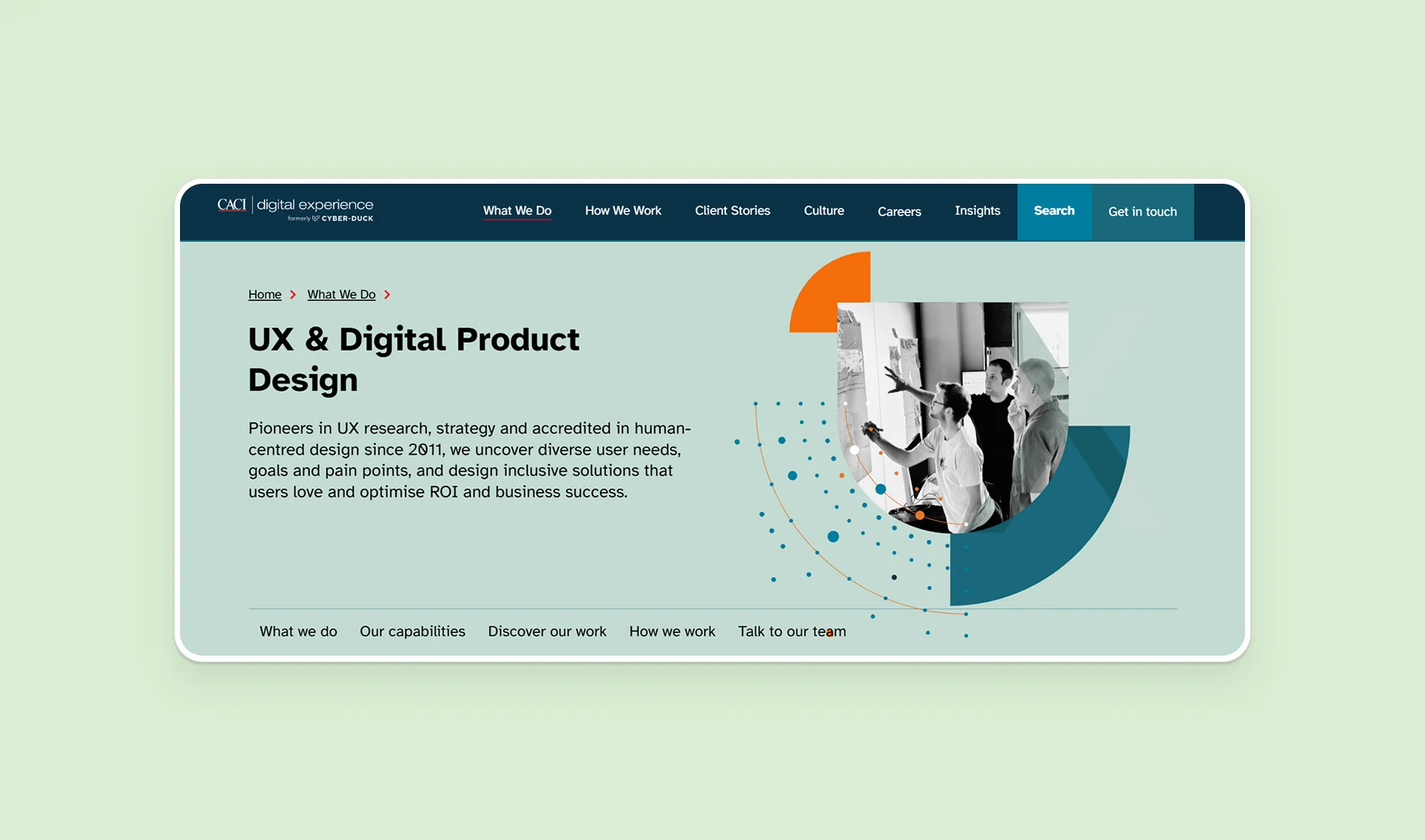
Cyber-Duck is a digital transformation agency founded in 2005, now operating as CACI Digital Experience, based in Elstree with a London presence at Farringdon. They are one of the few UK agencies with formal ISO certification across three disciplines simultaneously: ISO 9241 for human-centred design, ISO 9001 for quality management, and ISO 27001 for information security — a combination that matters significantly for financial services clients working under FCA oversight or handling sensitive customer data.
Best for regulated UK financial services — lenders, debt managers, banking institutions — that need rigorous, compliance-aware, accessibility-first UX and web delivery. Also strong for projects that must meet GDS or government digital procurement standards. Less suited to consumer fintech startups or neobanks seeking fast, product-design-led work; their process is methodical and accreditation-led, which suits compliance-heavy clients but can feel slow for agile product teams.
6. Foolproof (Zensar)
Research-led UX and service design for enterprise financial services brands
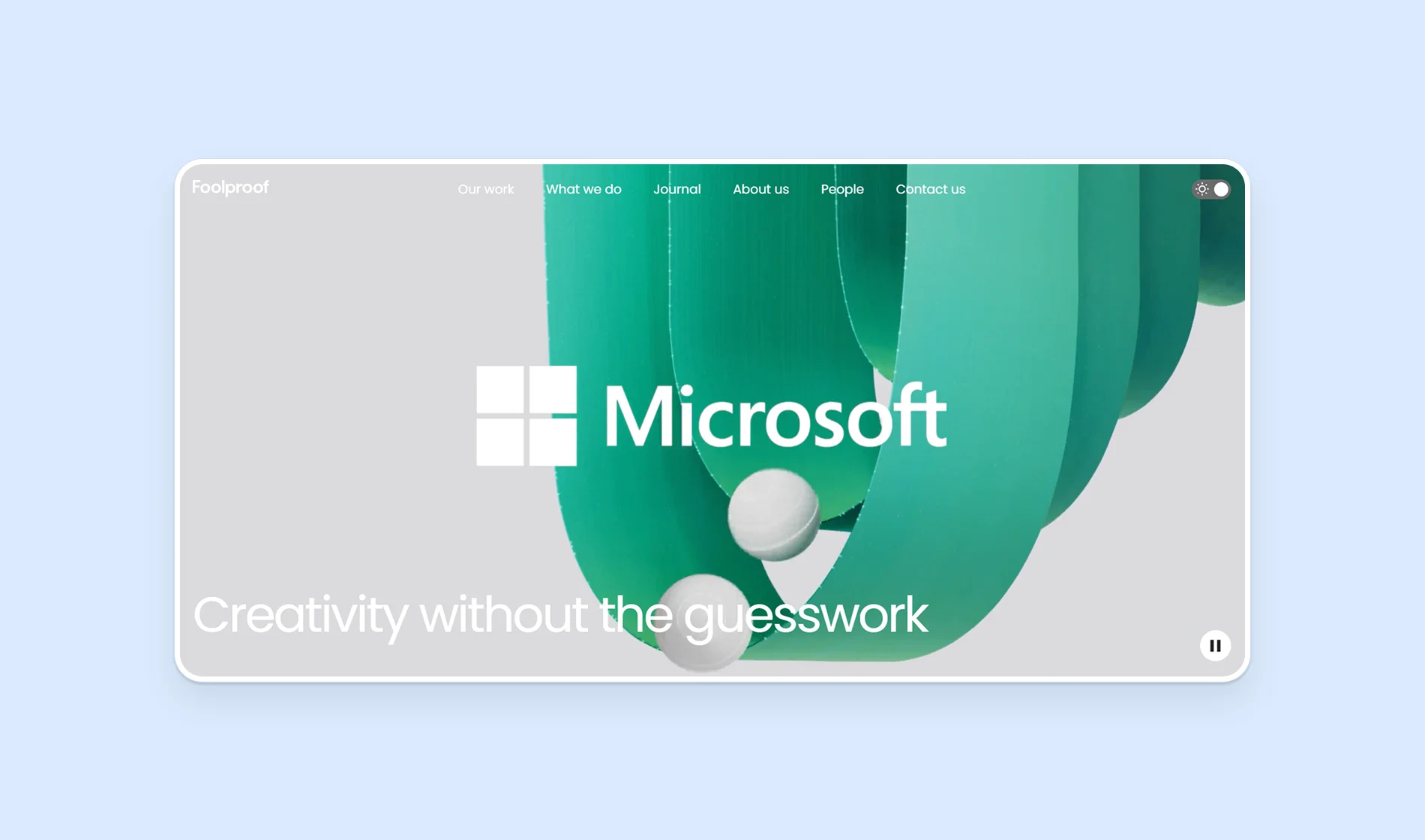
Foolproof was founded in 2002 and acquired by Zensar Technologies (an RPG Group IT company) in 2016, retaining its brand and London headquarters. It operates as one of Europe's longest-established dedicated experience design agencies, with around 200 staff globally and approximately 50 in the London studio. Their fundamental approach — using real customer insight at every stage of design — was built specifically to address what they saw as a blind spot in early digital design: brands building products based on internal assumptions rather than user behaviour.
Best for enterprise financial services companies — banks, insurers, wealth managers — with internal product teams that need research depth, UX strategy, and design maturity support. The minimum realistic engagement is £100K+, and their process is structured around long-term partnerships rather than short sprints. Zensar ownership brings IT integration capability but also adds organisational complexity. Startups or teams needing fast execution will find the approach too heavy for their stage.
7. Designit
Strategic innovation and service design from a global multi-studio consultancy
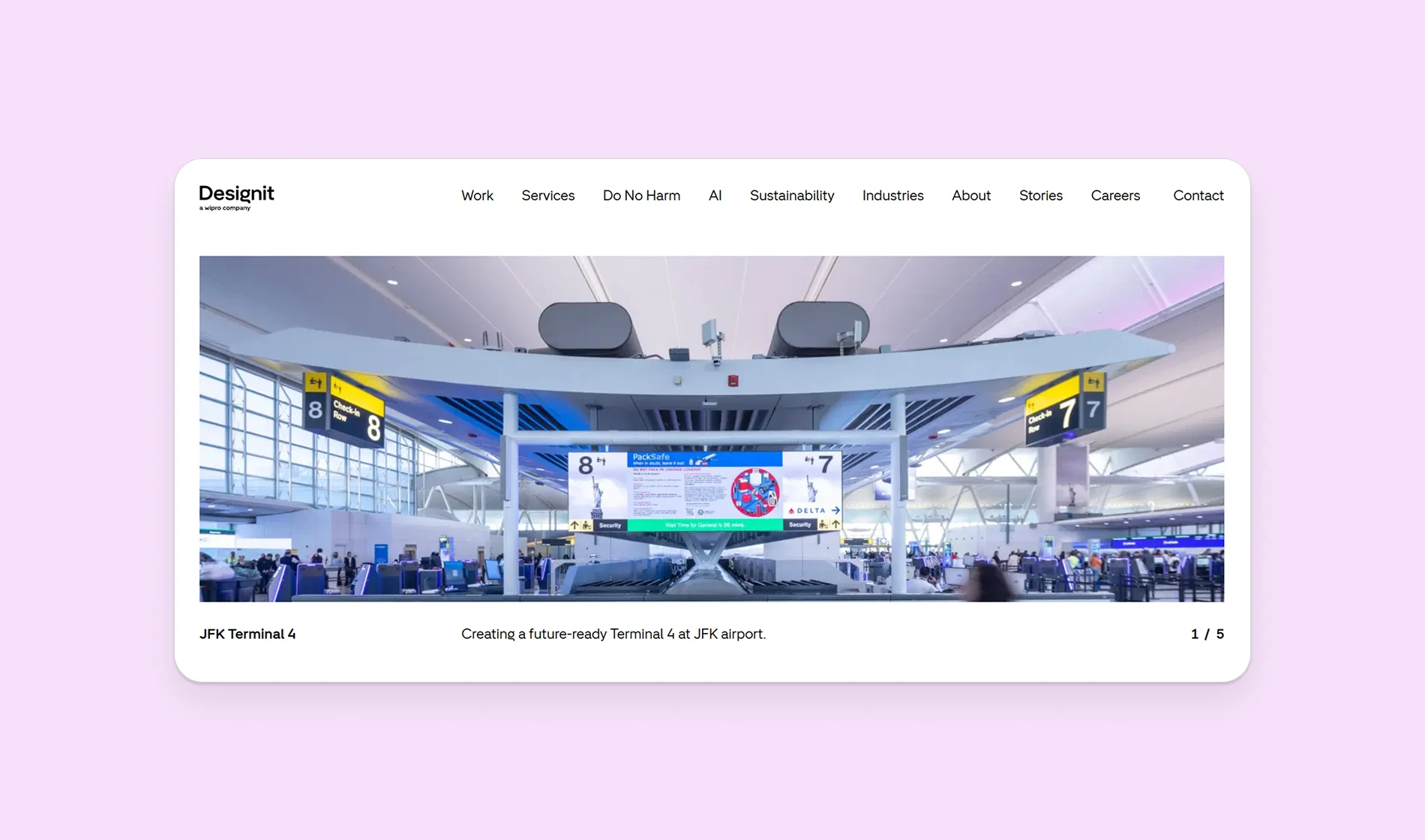
Designit is an international design firm founded in Aarhus, Denmark, in 1991, acquired by Wipro in 2015 for approximately $94M. They operate across 17 global studios, including a London base at 255 Blackfriars Road (SE1), established in 2015. With over 100 design awards, including iF, Red Dot, and GOOD Design, they have strong credentials in strategic design — particularly for large organisations navigating product launches, market repositioning, or service transformation.
Best suited for corporate financial institutions and mid-to-large companies seeking to launch new financial products or transform existing services, with design at the centre of the business case. The London studio is smaller than its Scandinavian base, and its fintech-specific domain depth is less developed than that of agencies that focus primarily on financial services. Wipro ownership adds delivery reach but can introduce the organisational complexity common to large-company-owned design practices.
What makes a great UX agency for fintech products & services
Fintech UX is not a subset of general UX work — it operates under different constraints and with higher stakes for users. Here is what separates capable fintech UX agencies from generalist studios:
1. Trust-building UX for financial products
Users deciding whether to deposit money, share financial data, or authorise transactions need interface signals that feel secure and credible. This is a design discipline in itself — one that generic product studios rarely have developed.
2. Onboarding, KYC, and identity verification experience
Financial product onboarding is complex. Multi-step verification, document capture, biometric checks, and regulatory ID requirements all create friction points. Agencies with experience here know how to reduce drop-off without cutting corners on compliance.
3. Complex dashboards, transactions, and data-heavy flows
Investment portfolios, payment histories, multi-currency balances, and loan repayment schedules — financial products routinely deal with dense data. Designing clarity from complexity requires pattern knowledge that only comes from doing it before.
4. Accessibility and compliance awareness
Financial products often serve users across age groups, abilities, and literacy levels. They also face WCAG obligations and may operate under FCA, PSD2, GDPR, and other regulatory frameworks. Agencies that do not understand this context will create friction during implementation.
5. Product thinking, not just interface design
The best fintech UX agencies contribute to product decisions — not just interface execution. They can challenge a brief, identify scope gaps, and help clients make better decisions about what to build, not just how to design it.
6. Ability to work with both startups and established financial brands
Startup fintech projects typically involve speed, limited resources, and rapid iteration. Enterprise or bank projects involve long governance cycles, legacy system constraints, and multiple layers of stakeholders.
Agencies that can navigate both contexts are more versatile partners. For more on what distinguishes a strong product mindset from a generic approach to product design, read our article.
How much does it cost to hire a fintech UX agency in London?
Pricing varies significantly based on agency size, engagement scope, and the seniority of the team involved. The ranges below are approximate indicators based on typical market positioning — not guarantees:
- Small specialist agencies or boutique studios: £8,000 – £30,000 for a defined project scope (audit, MVP UX, single product area)
- Mid-size agencies with fintech track record: £25,000 – £120,000+ for full UX design engagements covering research, design, and testing
- Large consultancies (Fjord, IDEO, Accenture Song): typically £150,000+ for transformation-scale engagements; often structured as retainer partnerships
- Ongoing retainer models: £8,000 – £40,000/month depending on team size and scope
Day rates for senior fintech UX professionals in London typically range from £700 to £1,500+. Agencies with strong fintech specialisation often command a premium over generalist studios at the same scale.
The most important variable is not price — it is whether the agency's scope and methodology match your product’s stage and complexity. A £200,000 engagement with a strategic consultancy adds no value to a startup validating an MVP. A low-cost studio without compliance awareness can lead to expensive rework for a regulated financial product.
How to choose the right fintech UX agency for your project?
1. Check domain experience, not just pretty visuals
Ask for case studies that are specific to financial services. Look for onboarding flows, transaction histories, KYC screens, dashboards, or trust patterns — not just generic app redesigns. A portfolio of consumer apps and e-commerce does not translate directly to financial product UX.
2. Review how they handle research and testing
Strong fintech UX agencies treat research as a core part of delivery, not an optional add-on. Ask how they validate assumptions before building and how they test with real users in financial contexts.
3. Look for product and business thinking
The best agencies ask about your business model, regulatory context, and user segments before scoping design work. If the first conversation is entirely about tooling, visual preferences, and timeline — without business context — that is a signal to probe further.
4. Ask about the collaboration model and team setup
Understand who will actually work on your project. Some agencies pitch senior talent and deliver through juniors. Ask for the team composition, whether they work embedded or remotely, and how decisions are made and communicated.
5. Compare strategic fit, not just price
A cheaper agency without fintech depth may end up costing more in revisions, compliance issues, and missed product goals. Evaluate fit based on portfolio relevance, research methodology, and communication quality — then negotiate on scope and timeline.
Before engaging an agency, a UX audit can provide a clear benchmark of your current product's strengths and gaps.
Final thoughts
London has a strong pool of UX agencies with financial services experience, ranging from global design consultancies to focused fintech specialists. The right choice depends on your product stage, complexity, budget, and the level of domain depth you need.
For fintech startups and scaleups, a specialist agency with verifiable banking and payments case studies will usually outperform a generalist studio — even one with stronger name recognition. For large financial institutions, a consultancy with experience in transformation and organisational change capability may be more relevant than a product-focused design shop.
The agencies in this list represent different points on that spectrum. Use the comparison table and individual profiles to match your situation, then request case studies and team introductions before committing.
Have a fintech project in mind? Let's talk and build a solution for you!
FAQ
What is a fintech UX agency?
A fintech UX agency specialises in designing digital experiences for banking, payments, lending, investment, and financial services. Unlike general UX studios, fintech-focused teams understand onboarding flows, KYC, compliance requirements, transaction-heavy interfaces, and trust-building UX patterns.
Why is fintech UX different from regular product design?
Financial products operate in high-trust environments where users manage money, identity verification, and sensitive data. Fintech UX requires balancing usability, security, compliance, accessibility, and conversion within often complex product flows.
What should I look for when choosing a fintech UX agency in London?
Look for proven fintech case studies, experience with regulated products, strong UX research capability, product strategy involvement, and evidence of designing complex financial flows — not just visually polished interfaces or logotypes.
Do fintech UX agencies only work with banks?
No. Most fintech UX agencies work across neobanks, payment platforms, lending products, investment apps, insurance platforms, fintech SaaS, and enterprise financial services companies.
How much does it cost to hire a fintech UX agency in London?
Costs vary depending on scope and agency seniority. Smaller UX engagements may start around £8,000–£30,000, while full product design and strategy projects can exceed £100,000 for complex fintech platforms.
What services do fintech UX agencies usually provide?
Most agencies offer UX research, UI design, product strategy, usability testing, design systems, prototyping, website design, and product development support. Some also provide branding and ongoing product optimisation.
Read more
 advantage
 Book a call
Fill out the form
or brief with questions



 LinkedIn
 Instagram
Welcome to Goodface privacy notice.
Goodface respects your privacy and is committed to protecting your personal data. This privacy notice will inform you as to how we look after your personal data when you visit our website (regardless of where you visit it from) and other sites we own and operate. And tell you about your privacy rights and how the law protects you.
We may change the privacy policy from time to time to reflect changes to the products and services that we provide and how we process your personal data.
We will not share your information with any third party outside of our organization, other than as necessary to fulfil your request if any."
INFORMATION WE COLLECTWhen you visit our website, our servers may automatically log the standard data provided by your web browser. This data is considered “non-identifying information”, as it does not personally identify you on its own. It may include:
- Your computer’s Internet Protocol (IP) address;
- Your browser type and version;
- The pages you visit;
- The time and date of your visi;
- The time spent on each page;
We may ask for personal information, such as your name and email address. This data is considered “identifying information”, as it can personally identify you. We only request personal information relevant to providing you with a service, and only use it to help provide or improve this service.
We collect information by fair and lawful means, with your knowledge and consent. We also let you know why we’re collecting it and how it will be used. You are free to refuse our request for this information, with the understanding that we may be unable to provide you with some of your desired services without it.
We will only process personal data and communicate with you if:
1. You have given us consent to the processing of your personal data and communicating for one or more specific purposes i.e. requesting products or services from us, downloading material or information from our website or submitting a contact us form.
2. Performance of a contract
3. Where we have a legitimate interest for contacting you in relation to our products and services
DATA PROCESSING AND STORAGEWe only retain personal information for as long as necessary to provide a service, or to improve our services in future. While we retain this data, we will protect it within commercially acceptable means to prevent loss and theft, as well as unauthorised access, disclosure, copying, use or modification. That said, we advise that no method of electronic transmission or storage is 100% secure, and cannot guarantee absolute data security.
Rights and choices of individuals:
- See what data we have about you, if any;
- Change/correct any data we have about you;
- Have us delete any data we have about you;
- See what security measures we apply to your data;
- Express any concern you have about our use of your data;
You may opt out of any future contacts from us at any time. You can do the following at any time by contacting us via the email address given on our website: goodface.agency
Got questions or want to discuss a project?


