

B2B website redesign for AI search: what to change in structure, content, and UI




B2B website redesign for AI search
No time to read? Explore through headphones, speakers, or on the go.
TL;DR
- Diagnose before you redesign. Open your five most important pages with JavaScript disabled: any service, price or case result missing there is missing for the crawlers behind ChatGPT and Perplexity. That check tells you whether you're buying a crawler setting, a rendering fix, a content rewrite, or a rebuild.
- The biggest blocker on design-heavy B2B sites is engineering. GPTBot, OAI-SearchBot and ClaudeBot read the HTML your server sends and don't run JavaScript, so content inside carousels, tabs, and script-loaded sections can be invisible to them.
- A CDN setting can keep you out of AI answers entirely. Cloudflare has blocked AI crawlers by default for new customers since July 1, 2025 — a security choice made years ago, by a different team, still applies today.
- Google treats AI search optimisation as SEO. Its May 2026 guide says an llms.txt file, special AI markup and content chunking aren't required to appear in AI Overviews or AI Mode.
- Buyers arrive from AI answers to check them, so key pages should open with facts they can verify: who you serve, what you deliver, timelines, and price ranges. Growth Memo found 44.2% of ChatGPT citations come from the first 30% of a page.
- A redesign makes your facts readable; mentions on other sites decide how often AI brings you up. In Ahrefs' study of 75,000 brands, branded web mentions correlated with AI Overview visibility at 0.664 — higher than any on-site signal.
What Google says doesn't change in AI search
Google's official position is that optimising for its AI features is SEO. Its May 2026 guide lists tactics site owners can ignore for Google Search: llms.txt and other AI text files, special AI markup, and splitting content into tiny chunks. Google adds that unique, useful content will likely do more for visibility in its AI features than any other step in the guide.
For a redesign brief, this removes a popular line item. If a proposal makes an llms.txt file the centre of its AI search work, you're paying for a file Google says Search doesn't use.
One distinction matters here. Google rules out AI-only markup, not structured data itself. Its page on AI features and your website still asks site owners to keep important content in text form, allow crawling in robots.txt and the CDN, and make sure structured data matches the visible text. Standard schema stays in scope, and we cover it in the structure section below.
Google's guidance also covers only Google, and Googlebot renders JavaScript. ChatGPT, Claude, and Perplexity crawl differently, which is where most B2B redesigns run into trouble.
Start with a diagnosis: five symptoms, five fix sizes
Match what you see in AI answers and analytics to its likely cause before you scope any work. The fix sizes below are rough ranges:
| What you see | Likely cause | How to check | Fix size |
| AI assistants rarely mention you or can't describe your site | AI crawlers blocked by robots.txt or a CDN setting | Review robots.txt and CDN bot rules; search server logs for GPTBot and ClaudeBot | Configuration change: days |
| Answers miss services, cases or prices that are on your site | Key content loaded by client-side JavaScript | Compare the raw HTML with the rendered page | Rendering fix per template: weeks. Rebuild if the stack can't render on the server |
| Answers cite old pages or outdated service names | Broken redirects from a past redesign; old facts on third-party profiles | Crawl old URLs; compare facts on Clutch and LinkedIn with the site | Redirect cleanup and profile updates: days to weeks |
| Answers about you are vague or generic | Pages open with adjectives instead of specific facts | Read the first paragraph of each service page | Content rewrite: weeks |
| AI-referred visitors arrive but don't contact you | Proof and pricing are buried; navigation doesn't match buying questions | Check landing pages and paths for AI referral traffic | Information architecture and UI changes: often a redesign |
Only the last row and the second, when your stack can't render on the server, usually justify a full redesign. The rest can ship on the site you have.
Structure: the premium design patterns AI crawlers can't read
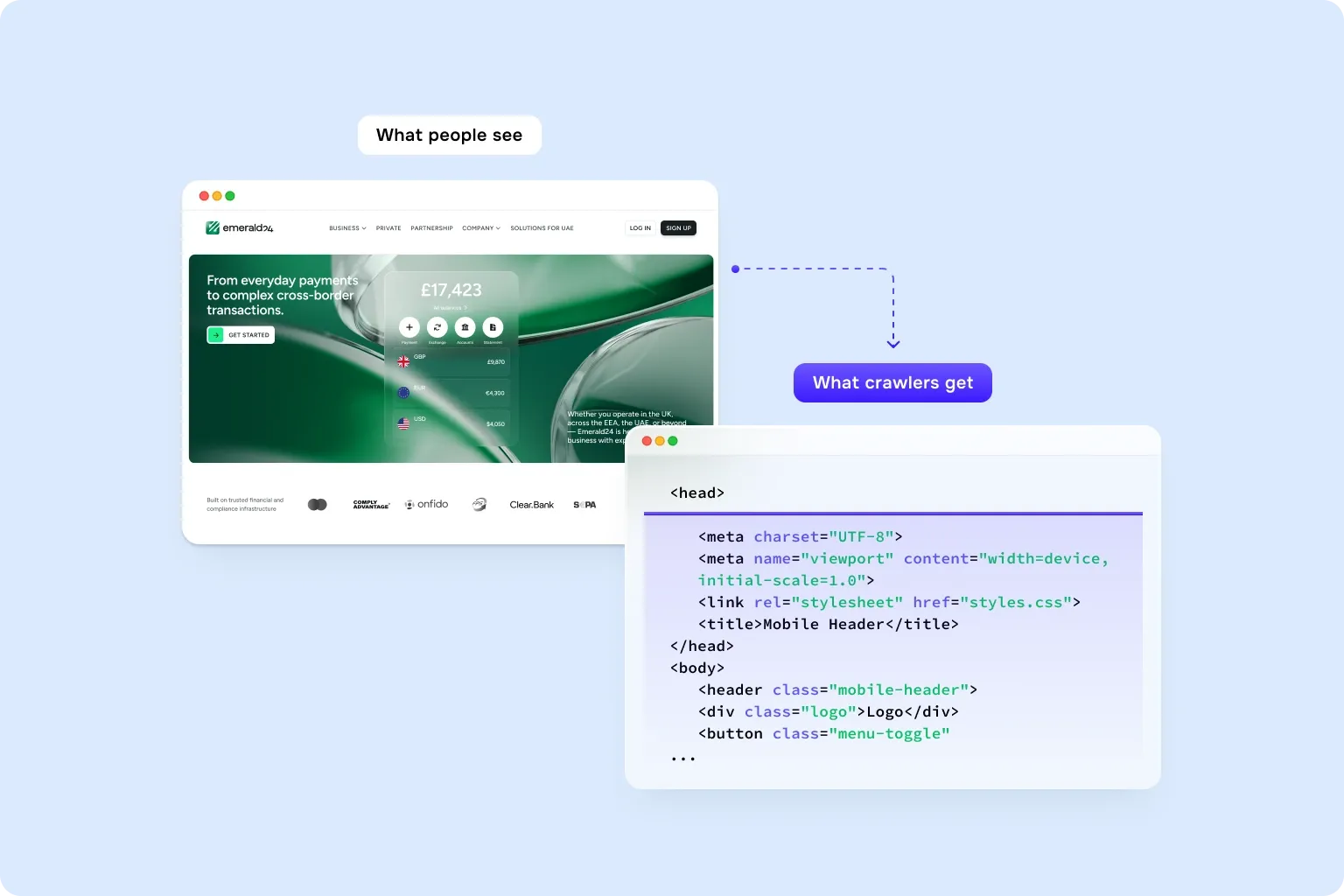
OpenAI's and Anthropic's crawlers read the HTML your server sends and don't run JavaScript. Vercel and MERJ tracked crawler traffic across Vercel's network and found no JavaScript execution by GPTBot, OAI-SearchBot, ChatGPT-User, or ClaudeBot.
| Crawler | Operator | What it does | What blocking it changes |
| GPTBot | OpenAI | Collects content for model training | Your content is excluded from future training; ChatGPT search can still cite you |
| OAI-SearchBot | OpenAI | Builds the index behind ChatGPT search | Your site stops appearing in ChatGPT search answers, apart from navigational links |
| ChatGPT-User | OpenAI | Fetches pages when a user asks ChatGPT | OpenAI says robots.txt rules may not apply, since a person triggers the visit |
| ClaudeBot | Anthropic | Collects content for model training | Signals that your future content should be excluded from training |
| Claude-SearchBot | Anthropic | Indexes content for Claude's search results | Reduces your visibility and accuracy in Claude's search answers |
| Claude-User | Anthropic | Fetches pages when a user asks Claude | Claude can't retrieve your pages for those questions |
| Google-Extended | A robots.txt token for Gemini training and grounding, not a separate crawler | No effect on inclusion or ranking in Google Search |
Most B2B companies we work with want to be cited, so our default is to allow search and user-triggered bots and settle the training question as a separate business decision.
We check the CDN as well as robots.txt. On July 1, 2025, Cloudflare switched its default to blocking AI crawlers, so a security setting chosen by another team can keep a site out of AI answers entirely.
B2B sites lose the most where the design work is richest. The patterns that make a site feel premium often load their content with client-side JavaScript, and each one hides something a buyer's AI briefing needs:
| Design pattern | What a non-rendering crawler can miss | Business consequence |
| Tabbed service blocks | Every tab except the default one | AI describes one service and misses the rest |
| Case study carousels loaded from a CMS API | Client names, industries, results | Your proof never enters the AI summary |
| Pricing toggles and project calculators | Every price and range | AI tells buyers your pricing is unknown, or quotes a competitor's |
| Animated stat counters | The final numbers, which can render as "0" | Your headline metrics disappear |
| Testimonial sliders and logo walls injected by script | Client names and quotes | Social proof is invisible to the model |
The fix is a rendering decision made per page template. Render primary content on the server or at build time, and keep client-side JavaScript for interaction. Tabs and accordions are fine when every panel's text is already in the HTML, and JavaScript only toggles visibility.
Design and engineering have to make these calls together. We build marketing sites on WordPress, Webflow, React, and Vue.js with Strapi, and each stack handles rendering differently. The choice of motion, components, and CMS structure decides what crawlers receive, so we review it in the same pass as the visual design.
Crawler access and redirects
Before anyone redesigns a page, confirm AI crawlers can reach it. A security setting chosen years ago, or by a different team, can keep your site out of AI answers entirely.
This is a business decision as much as a technical one. Blocking training crawlers and allowing search crawlers are separate choices, so decide which bots you want with marketing and engineering in the same room.
Redirects are the second structural check
A redesign that changes URLs without a full redirect map sends crawlers into dead ends, and they already hit plenty: in the Vercel and MERJ data, about 34% of requests from ChatGPT's and Claude's crawlers landed on 404 pages. Old URLs keep circulating in third-party articles, directory profiles and past AI answers, so each broken one fails twice.
Treat the redirect map as part of the redesign scope:
- Export every live URL before design starts, including blog posts, case studies and PDFs.
- Map each old URL to its closest new page with a single 301 redirect, without chains.
- Update links on profiles you control: Clutch, LinkedIn, partner and directory pages.
- For the first month after launch, check server logs for 404s by user agent, including GPTBot, OAI-SearchBot and ClaudeBot.
AI doesn't see your website?
Redesign might help — drop us a line.

Semantic HTML and structured data
Rendering decides whether text reaches a crawler. Markup decides whether the crawler can tell what that text is. On every template, we check:
- One <h1> per page and a heading order that follows the content.
- Real <table> elements for comparisons and pricing, not grids of styled divs
- Text set as HTML text, not inside images or SVG files.
- Descriptive alt text on case visuals, diagrams, and charts.
- Structured data that matches the visible text: Organisation, Service, Article with a named author, and BreadcrumbList.
Schema doesn't make a page citable by itself. It helps search engines and models connect a page to the right company, service, and author when the visible text already says it.
Information architecture: one page per buying question
AI assistants answer specific questions, so they cite specific pages, so a buyer asking for a UX audit for a B2B SaaS product gets a better match from a page about exactly that than from a services page listing twelve offerings.
We plan B2B site maps as hubs and spokes: a hub page per service, spoke pages per industry or use case, and case studies linked from both. Four details keep that structure crawlable:
- Breadcrumbs that mirror the hierarchy.
- A short click path from the homepage to every service and case page.
- An XML sitemap that lists every public page.
- Case libraries with plain paginated links, not infinite scroll that loads more cases only through JavaScript.
Redirects: the migration step that breaks AI visibility
A redesign that changes URLs without a full redirect map sends crawlers into dead ends, and AI crawlers already hit plenty of them. In the Vercel and MERJ data, 34.82% of ChatGPT's crawler fetches and 34.16% of Claude's landed on 404 pages. Old URLs keep circulating in third-party articles, directory profiles, and past AI answers, so each broken one fails twice.
On redesign projects, the redirect map is part of our scope:
- We export every live URL before design starts, blog posts, case studies, and PDFs included.
- We map each old URL to its closest new page with a single 301 redirect, without chains.
- We update links on the profiles the client controls: Clutch, LinkedIn, partner, and directory pages.
- For the first month after launch, we check server logs for 404s by user agent, including OAI-SearchBot and Claude-SearchBot.
Bing and IndexNow: the cheapest step on the list
ChatGPT's search draws heavily on Bing's index, according to tests reported by Search Engine Roundtable; OpenAI hasn't published the details. A page missing from Bing can be missing from ChatGPT's answers, however well it ranks on Google.
On every site we launch, we verify the domain in Bing Webmaster Tools, submit the sitemap, and connect IndexNow, so new and updated pages reach Bing without waiting for the next crawl. Bing Webmaster Tools also includes an AI Performance report that shows how often your pages are cited in Copilot answers.
Content: answer-first pages built from facts a model can quote
AI assistants quote specific statements, so every key page should open with the facts a buyer asks about. Kevin Indig's Growth Memo analysis found that 44.2% of ChatGPT citations come from the first 30% of a page's text.
On a service page, the first block of text should answer four questions:
- Who is this for?
- What does the client receive?
- How long does it usually take?
- What does the price depend on?
The brand story and process diagram come after. Publish price ranges as text, never only inside an image or a calculator.
Keep the same facts everywhere a model might check them. Service names, team size, founding year, case results and price ranges should match across your site, Clutch, LinkedIn and partner pages. When sources disagree, an AI summary may pick the outdated figure or hedge.
Case studies carry the most quotable facts on a B2B site. Open each one with the customer type, the problem, what your team or product did and one result with its baseline and timeframe.
UI: designing for the buyer who verifies an AI answer
Buyers who come from an AI answer arrive to check it, so the UI should put evidence where the claims are.
In Gartner's survey of 645 B2B buyers, 69% preferred to validate AI-generated insights with sales reps, and 51% said they were more likely to encounter misleading information from generative AI.
A buyer with a shortlist skips the homepage pitch. They look for confirmation that you've solved their kind of problem for their kind of company, at a scope and price that fit.
The UI decisions that we use on our website help shorten that check:
- Proof beside each claim. A case result or client logo sits next to the service it supports, not on a separate testimonials page.
- Case filters by industry, business model and product type. Each card states the work done, so the buyer can scan scope without opening every case.
- Price ranges in plain text. List what sets the price, so both the buyer and the model can quote it.
- A fit section. One block that says who the service suits and when another approach works better.
- A contact path that ends with a person. Offer a booking link next to the form, so a briefed buyer reaches someone in one step.
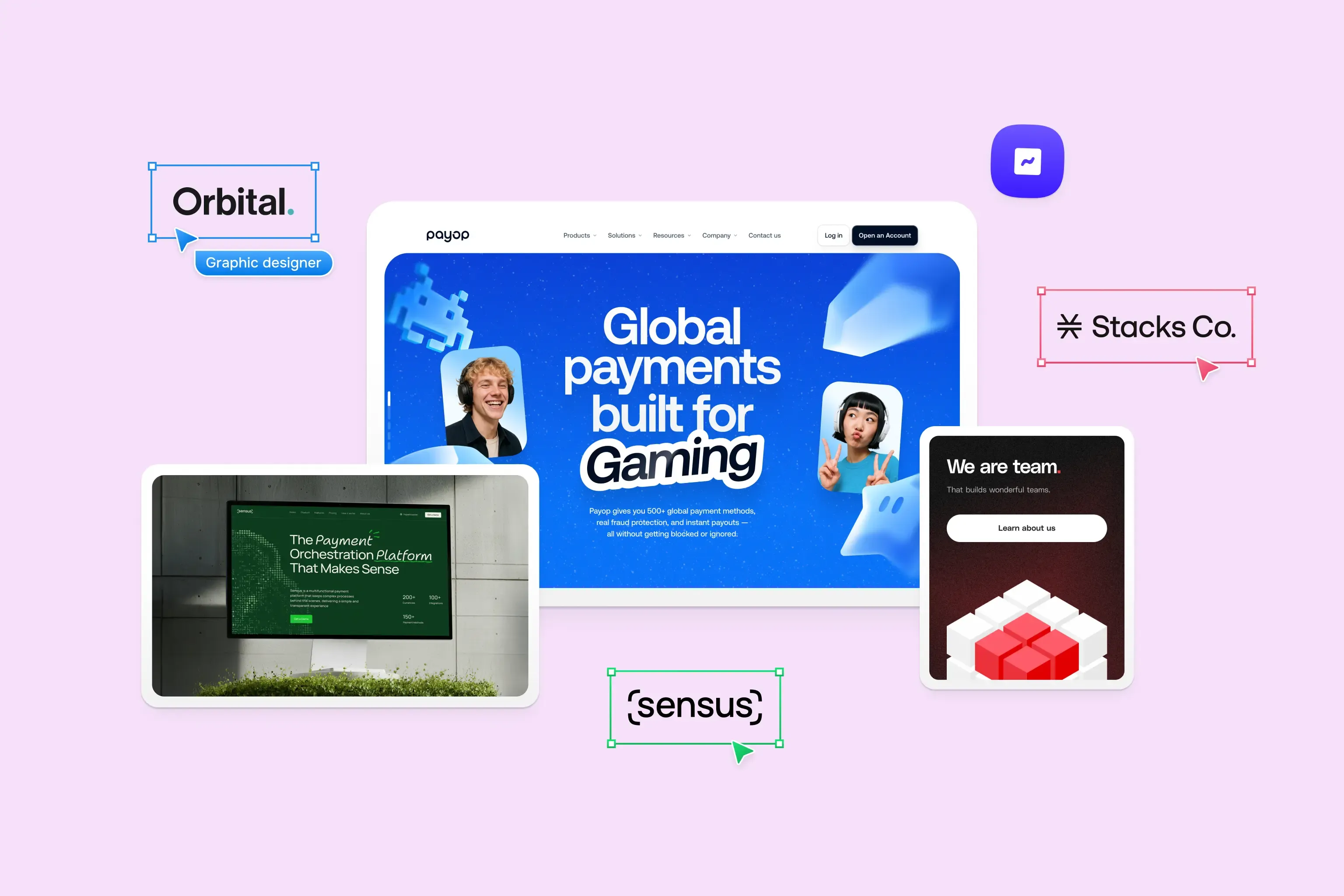
Three B2B website redesigns from the Goodface team
A website redesign's depth should match how far the company has moved since its last site. In three Goodface projects, the answer ranged from evolving an existing identity to building a brand and website from nothing.
None of them was scoped as AI search work, but each team faced the question this guide asks: does the site still explain what the company does to a reader who has never heard of it, human or machine?
Orbital: restructure the site around how clients think
Most B2B sites mirror the company's internal structure: one menu item per department or product line. Buyers and AI assistants don't search that way. They ask about an industry, a service, or a capability, so we rebuilt Orbital's navigation along those three lines. Each became an entry point that answers a specific buying question, which gives a model a precise page to cite instead of a general overview.
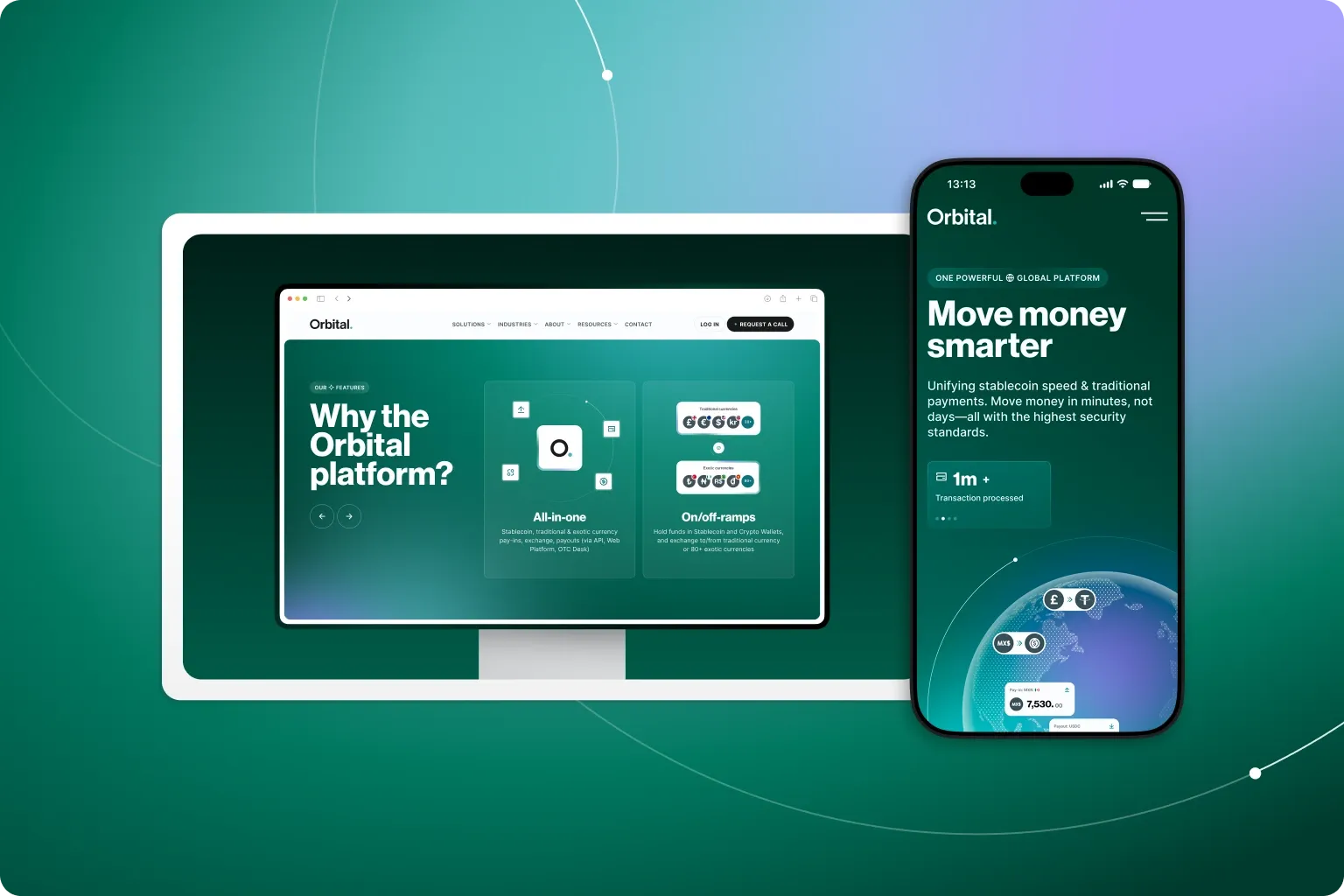
We kept the recognisable parts of Orbital's identity instead of rebranding from zero
That choice protects more than visual recognition. Directory profiles, press mentions, and past AI answers already describe the company in a certain way, and an evolution keeps the new site consistent with them. A full rebrand resets those signals, so it makes sense only when the old identity actively misleads buyers.
SEO, performance, and accessibility were in scope from the start. Added after launch, they turn into a second project. Planned with the information architecture, they shape which templates exist and what each one renders.
Payop: rebuild a site that couldn't show the product's scale
When a client says the site feels too small, the instinct is to fix it with visuals. We started by defining the deeper issue.
A site shows scale through the number of specific questions it can answer: which markets, which payment methods, which industries. Discovery and the sitemap decide those pages before anyone picks colours, and information-dense wireframes test whether each page states its facts plainly.

Payop's visual language is deliberately loud, with bold colours, pseudo-3D, and game-inspired UI for an audience that includes gaming and e-sports businesses. Expressive design and AI readability coexist when the visuals frame the text instead of carrying it. Headlines, figures, and service descriptions belong in the HTML, with illustrations and motion around them.
Adaptiq: build the brand and the site from scratch
Mixed-audience sites confuse models as much as people. When services and vacancies share pages, an AI answer about the company's services risks pulling in hiring copy, and a candidate's question can surface sales pages. We mapped where the two audiences' needs overlap and gave each its own user flow.
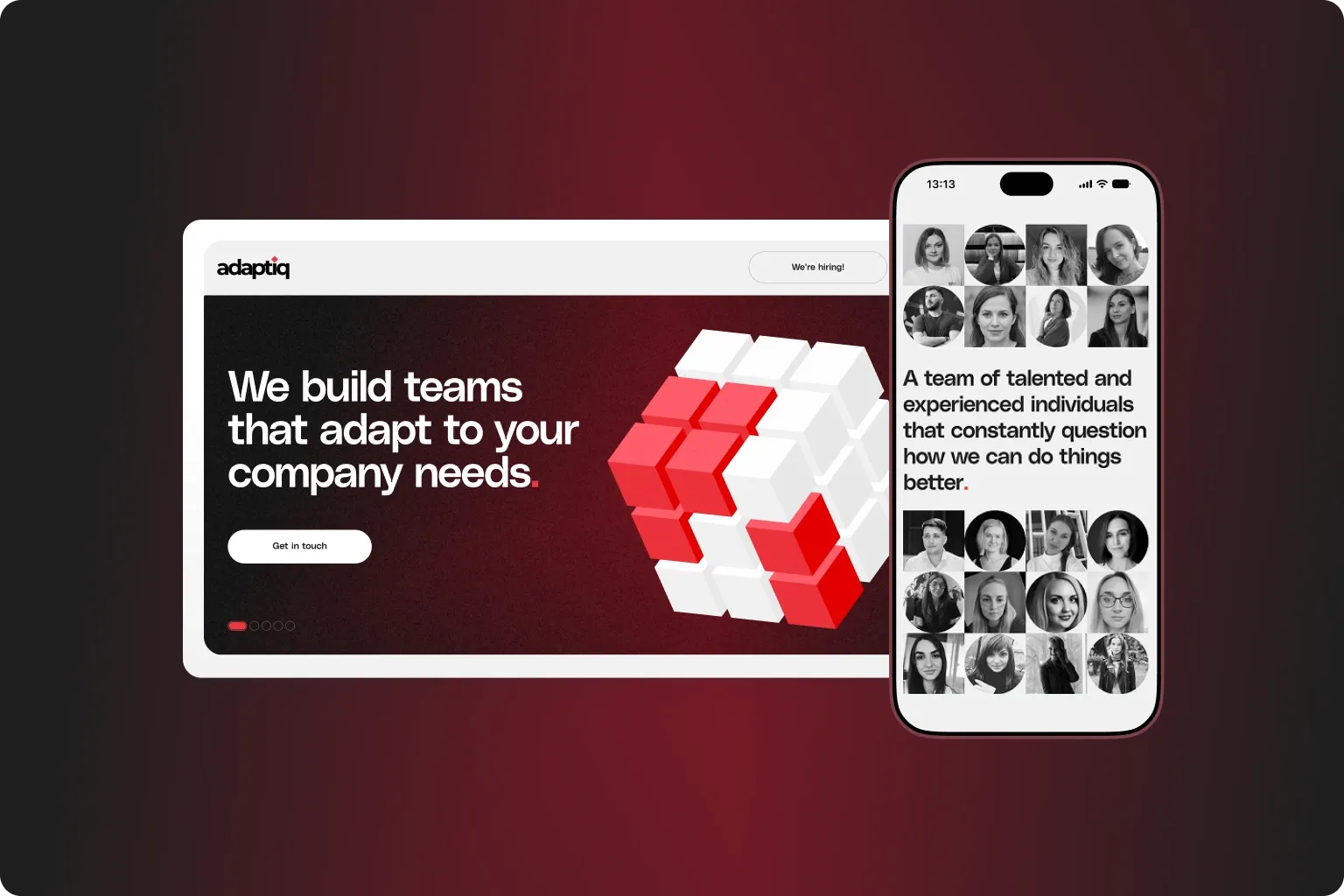
Every page answers one audience's question
Adaptiq had a logo but no brand identity, so the visual system was built alongside the site. When a company defines its brand from scratch, the vocabulary matters as much as the visuals: the service names chosen at this stage become the words buyers, directories, and AI assistants use to describe the company for years.
The last decision was ownership. We built the site on WordPress and gave the client instructions for managing it, because facts stay current only when the client's own team can update them. A site that needs a developer for every new service or vacancy drifts out of date, and AI answers drift with it.
When a full redesign is the right call
A full redesign earns its cost when the fixes above don't fit the site you have. Four situations usually decide it:
- The information architecture can't hold one page per buying question. If services, industries and use cases share one overloaded page, rewriting copy won't create the pages buyers and models look for.
- The stack can't render key content on the server without rebuilding the templates anyway.
- The site describes a smaller company than the one you run. Product, pricing and market have moved on, and every page tells the older story.
- A rebrand or repositioning changes the message on every page, so a page-by-page update costs more than a rebuild.
For Payop, a global payment platform, the existing site felt dated and too small for the scale the company had reached, so the team rebuilt the digital presence from the ground up.
For Emerald24, we launched a website architecture built to keep adding products and market-specific content.
If you're unsure which situation you're in, a UX audit or a short discovery phase answers it before design starts. Our guides on planning a website redesign and validating redesign ROI cover the next steps.
What a website redesign can't fix on its own
The signals most associated with AI visibility sit outside your website. Ahrefs studied 75,000 brands and found the strongest correlations with AI Overview visibility were all off-site: branded web mentions (0.664), branded anchor text (0.527) and branded search volume (0.392).
Ahrefs notes that correlation doesn't prove cause. The pattern still sets a fair expectation. A redesign makes your facts readable and checkable; mentions from other people decide how often models bring you up.
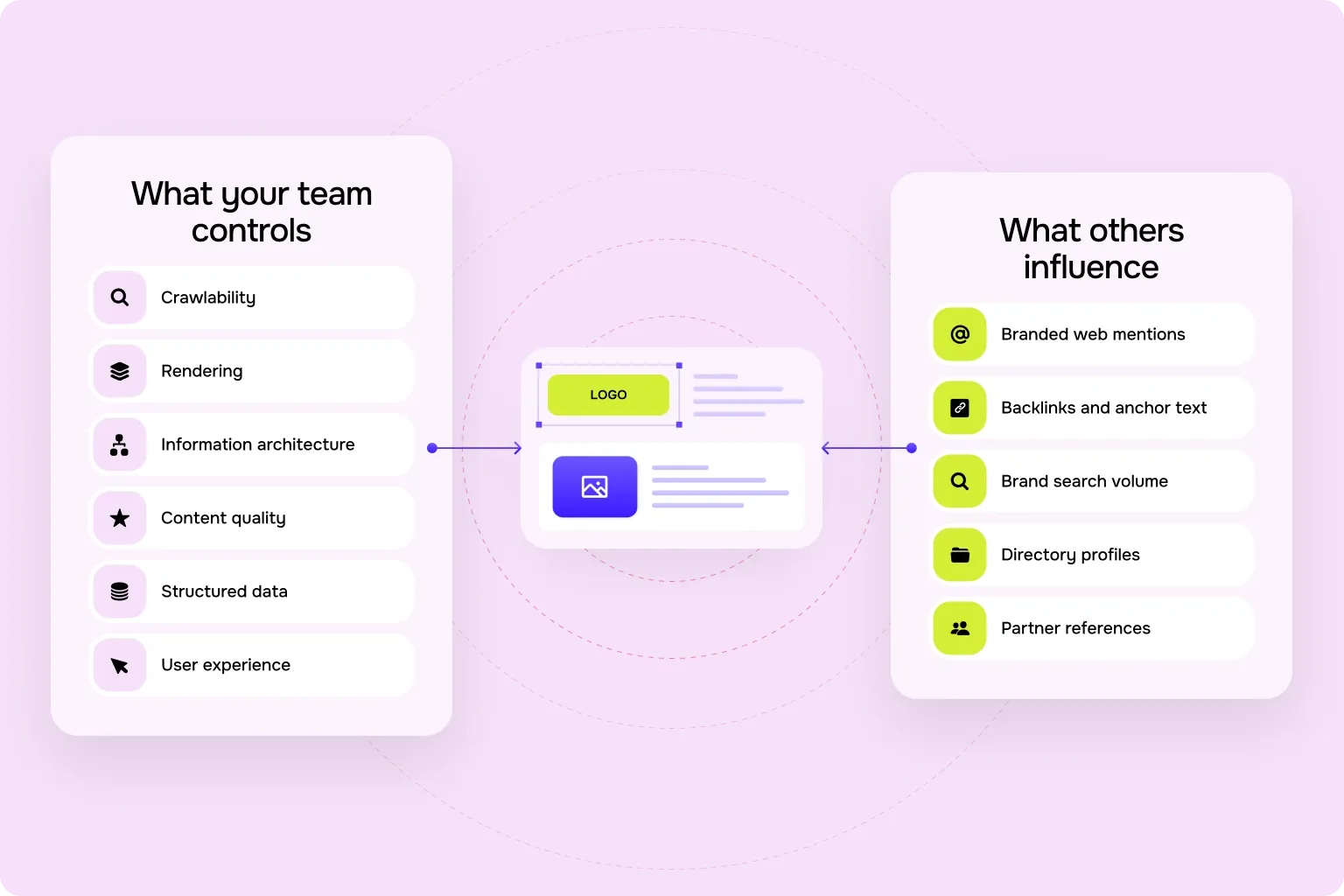
Plan the redesign and the off-site work together. A rebuilt case study section gives clients and partners something specific to link to. Original data, such as benchmarks from your own product, gives writers a reason to name you. Updated directory profiles keep third-party facts in line with the new site.
No agency can guarantee AI citations, and a proposal that promises them is guessing. A redesign removes the reasons a model would skip or misquote you, which is the part a website team controls.
How to check where you stand this week: a quick checklist
Start with what AI crawlers receive, then measure what buyers do. Six checks fit into a working week and give a redesign brief its first evidence:
- Crawler access. Review robots.txt and your CDN's bot settings for GPTBot, OAI-SearchBot and ClaudeBot.
- Raw HTML. Open your five most important pages with JavaScript disabled, or fetch them with curl. Any heading, price, case result or link missing there is missing for crawlers that don't render.
- Prompts. Ask ChatGPT, Perplexity and Google AI Mode the questions your buyers ask when building a shortlist. Note whether you appear and whether the facts are right, then repeat monthly with the same prompts.
- Search Console. Review the performance data for Google's generative AI features.
- Analytics. Segment referral traffic from chatgpt.com, perplexity.ai and other assistants in GA4, and track which pages those visitors land on.
- Lead form. Add "AI assistant (ChatGPT, Perplexity, etc.)" to your "How did you find us?" field.
Use the raw HTML check as the gate for the redesign brief. If it can't say who you serve, what you deliver and what it costs, that's the first thing to fix, with or without a new design.
What changes in design reviews next
Mobile-friendly design went from a feature to an acceptance criterion within a few years. We expect AI readability to follow the same path, with design reviews checking what a crawler receives from a page as routinely as they check how it looks on a phone.
For our team, rendering, markup, and content structure have moved from the pre-launch QA list into the first design review. A pricing toggle or a case carousel gets approved with its raw HTML output in view, by a designer and an engineer at the same table.
The first week of a project now does more for the budget than the first mockup. A raw HTML check, a crawler review, and a set of buyer prompts show where the money should go before anyone opens Figma.
Get your website ready for AI visibility
Redesign with Goodface — let's discuss your project details.
FAQ
Do I need a full website redesign to show up in AI search?
Not always. Blocked crawlers, broken redirects and vague service copy can all be fixed on your current site. A full redesign makes sense when your information architecture, CMS or rendering setup can't support those fixes, or when the site describes an older version of your company.
Why does my site rank on Google but rarely appear in ChatGPT answers?
Googlebot renders JavaScript, while the crawlers behind ChatGPT and Claude read only the HTML your server sends. If your services, cases or prices load through client-side scripts, Google can see them and ChatGPT can't. A CDN setting that blocks AI crawlers has a similar effect.
Does an llms.txt file help a B2B website appear in AI answers?
For Google, no. Google's guide to its generative AI features says you don't need llms.txt or special AI markup to appear in AI Overviews or AI Mode. Other AI providers haven't published equivalent guidance, so treat llms.txt as optional and low priority.
Will a redesign hurt our Google rankings?
It can, mostly through changed URLs. Map every old URL to its new page with a 301 redirect before launch, update links on profiles you control and monitor 404s for a month afterward. The same steps protect your visibility in AI answers.
How much does a B2B website redesign for AI search cost?
It depends on fix size. Crawler settings and redirects take days of engineering work, while a full redesign is a larger project. At Goodface, B2B web design and development projects typically range from $6,000 to $120,000+, depending on the number of templates, custom motion design and backend complexity.
Explore more on our Pricing page.
How soon will we see changes in AI answers after fixing the site?
There's no reliable timeline. Each AI provider crawls and refreshes its sources on its own schedule, and off-site mentions also shape what models say. Track the same set of buyer prompts monthly, alongside AI referral traffic, to see the trend.
Read more


Заповніть форму або
бриф із запитаннями



 LinkedIn
 Instagram
Welcome to Goodface privacy notice.
Goodface respects your privacy and is committed to protecting your personal data. This privacy notice will inform you as to how we look after your personal data when you visit our website (regardless of where you visit it from) and other sites we own and operate. And tell you about your privacy rights and how the law protects you.
We may change the privacy policy from time to time to reflect changes to the products and services that we provide and how we process your personal data.
We will not share your information with any third party outside of our organization, other than as necessary to fulfil your request if any."
INFORMATION WE COLLECTWhen you visit our website, our servers may automatically log the standard data provided by your web browser. This data is considered “non-identifying information”, as it does not personally identify you on its own. It may include:
- Your computer’s Internet Protocol (IP) address;
- Your browser type and version;
- The pages you visit;
- The time and date of your visi;
- The time spent on each page;
We may ask for personal information, such as your name and email address. This data is considered “identifying information”, as it can personally identify you. We only request personal information relevant to providing you with a service, and only use it to help provide or improve this service.
We collect information by fair and lawful means, with your knowledge and consent. We also let you know why we’re collecting it and how it will be used. You are free to refuse our request for this information, with the understanding that we may be unable to provide you with some of your desired services without it.
We will only process personal data and communicate with you if:
1. You have given us consent to the processing of your personal data and communicating for one or more specific purposes i.e. requesting products or services from us, downloading material or information from our website or submitting a contact us form.
2. Performance of a contract
3. Where we have a legitimate interest for contacting you in relation to our products and services
DATA PROCESSING AND STORAGEWe only retain personal information for as long as necessary to provide a service, or to improve our services in future. While we retain this data, we will protect it within commercially acceptable means to prevent loss and theft, as well as unauthorised access, disclosure, copying, use or modification. That said, we advise that no method of electronic transmission or storage is 100% secure, and cannot guarantee absolute data security.
Rights and choices of individuals:
- See what data we have about you, if any;
- Change/correct any data we have about you;
- Have us delete any data we have about you;
- See what security measures we apply to your data;
- Express any concern you have about our use of your data;
You may opt out of any future contacts from us at any time. You can do the following at any time by contacting us via the email address given on our website: goodface.agency
Лишились питання або хочете обговорити проєкт?


